
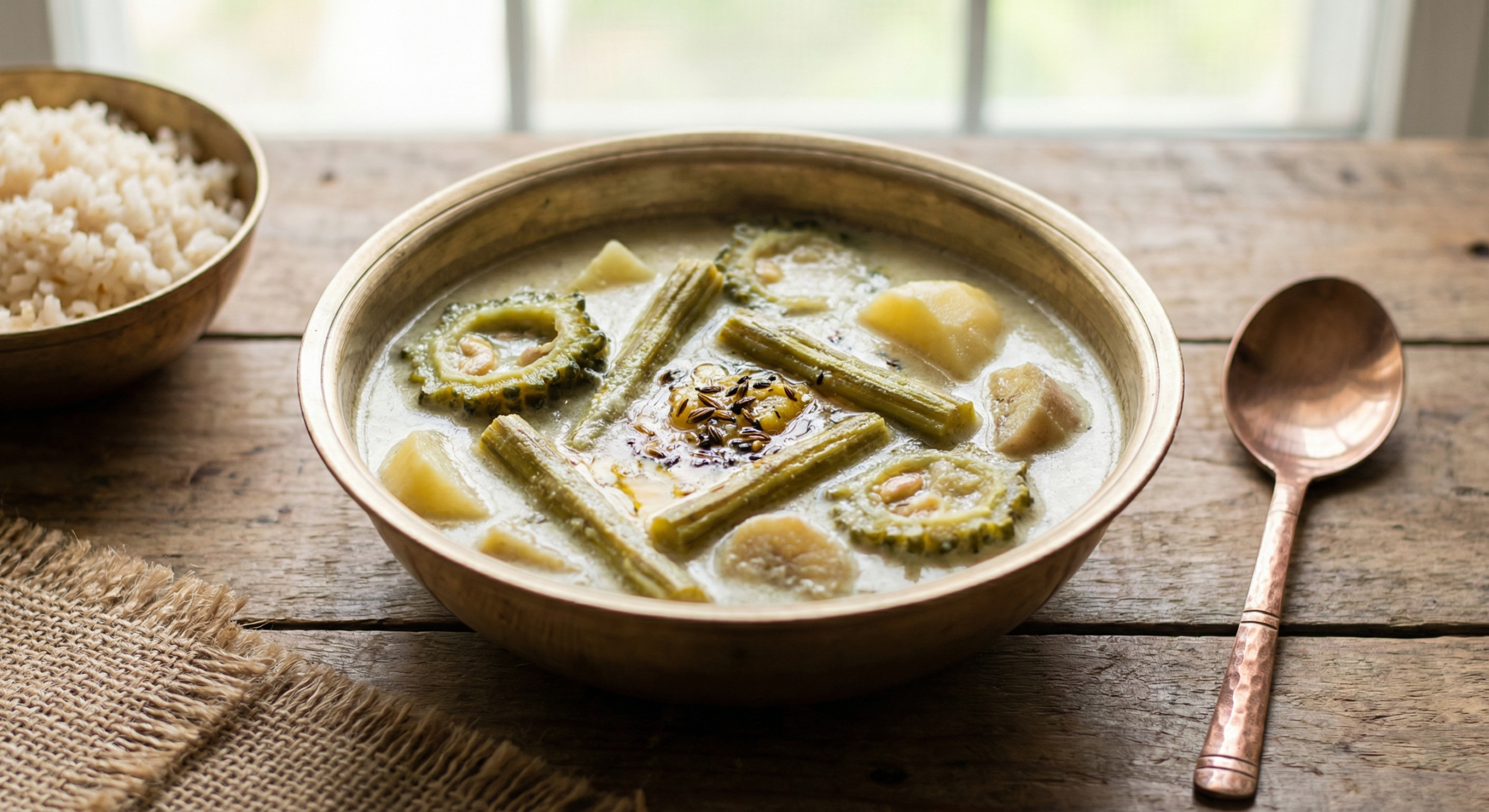
Shukto: The Quintessential Bitter-Sweet Symphony of West Bengal
If you have ever been invited to a traditional Bengali feast, you might have noticed a creamy, bittersweet vegetable medley served as the very first course. This is Shukto, a dish that defies the common perception of Indian cuisine as purely “spicy.” Deeply rooted in Ayurvedic principles and colonial history, Shukto is more than just a recipe; it is a palate cleanser, a digestive aid, and a cooling balm for the humid plains of Bengal. Whether it is a wedding or a quiet Sunday lunch, a Bengali meal is incomplete without this sophisticated starter.
The Cultural Soul of Shukto
Shukto finds its mention in ancient texts and the 15th-century Mangalkavya literature. Interestingly, culinary historians often debate its origins, with some pointing towards Portuguese influence—suggesting that the Portuguese brought the concept of a milky vegetable stew, which Bengalis then localized using indigenous bitters like Korola (bitter gourd) and Neem. Regardless of its origin, the dish is a cornerstone of the Vaishnava vegetarian tradition, emphasizing balance and wellness.
Key Ingredients
- Bitters: Bitter Gourd (Korola) or Uchhe.
- Tubers: Potatoes, Sweet Potatoes, and Raw Banana (Kacha Kola).
- Vegetables: Drumsticks (Sojne Danta), Eggplant (Begun), and Papaya.
- Spices: Panch Phoron (Bengali five-spice), Radhuni (wild celery seeds), and Mustard Paste.
- The Cream Factor: Whole milk and Ghee.
- The Crunch: Bori (sun-dried lentil dumplings).
Step-by-Step Cooking Instructions
- Fry the Bori and Bitters: Start by frying the lentil dumplings (Bori) until golden. Set them aside. Then, lightly fry the sliced bitter gourd and set aside.
- Sauté the Vegetables: In the same oil (preferably mustard oil), temper with dried red chilies and bay leaves. Add the long-cut vegetables like potatoes, raw bananas, and drumsticks. Sauté them on medium heat.
- The Spice Paste: Add ginger paste and mustard-poppy seed paste. Sauté carefully so the mustard doesn’t turn bitter.
- The Stew: Add water and salt, cover, and let the vegetables simmer until tender.
- The Finish: Pour in half a cup of milk and add the fried bori and bitter gourd. Sprinkle a pinch of sugar (essential for the balance) and the secret ingredient—Radhuni paste or powder.
- The Tempering: Finish with a dollop of Ghee. Let it rest for 5 minutes before serving with steamed rice.
The Story of Radhuni
What makes Shukto truly “Bengali” is the use of Radhuni. Often mistaken for celery seeds or ajwain, Radhuni has a pungent, grassy aroma that is essential for an authentic Shukto. It is said that without Radhuni, the dish is merely a vegetable stew; with it, it becomes a cultural heritage.
Frequently Asked Questions (FAQ)
Why is Shukto served first?
In accordance with Ayurveda, starting a meal with a bitter dish stimulates the digestive enzymes and prepares the stomach for the heavier courses to follow.
Can I make Shukto without milk?
While milk provides the signature creamy texture, some traditional variations use only ginger and mustard paste for a lighter, “jhola” version.
Is Shukto always vegetarian?
Yes, traditional Shukto is strictly vegetarian and often prepared without onion or garlic (niramish).
Leave a Reply