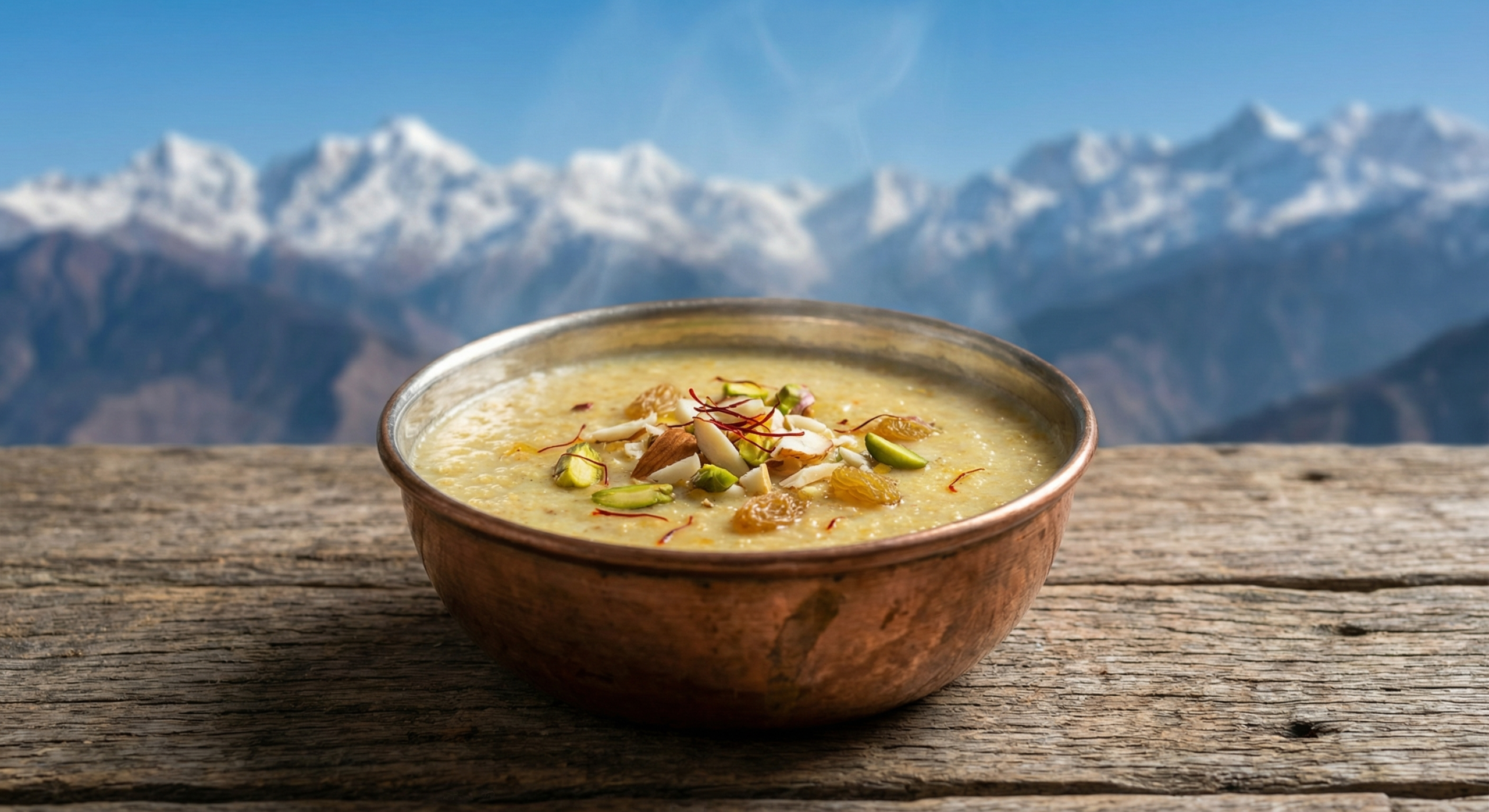
Jhangora Ki Kheer: The Himalayan Barnyard Millet Pudding
High in the mist-covered peaks of Uttarakhand, where the air is crisp and the soil is rugged, grows a resilient grain that has sustained the Garhwali and Kumaoni people for generations. This grain is Jhangora (Barnyard Millet), and the most celebrated way to enjoy it is in the form of Jhangora Ki Kheer. This creamy, gluten-free pudding is a testament to the simplicity and nutritional wisdom of Himalayan cuisine.
The Heritage of Jhangora
Jhangora is one of the oldest cultivated millets in the world. In the villages of Uttarakhand, it was historically a staple food, often eaten as a substitute for rice. Because it grows easily in high altitudes without much water, it became the “life-grain” of the mountains. Jhangora Ki Kheer is traditionally prepared during local festivals, religious fasts (vrat), and family celebrations. Unlike rice kheer, Jhangora kheer has a unique, slightly nutty texture and is remarkably light on the stomach.
Key Ingredients
- The Grain: Jhangora (Barnyard Millet).
- Dairy: Full-fat milk (preferably mountain-fresh cow or buffalo milk).
- Sweetener: Sugar or Jaggery (Gur).
- Aromatics: Green Cardamom powder and a few drops of Kewra essence.
- Garnish: Cashews, Almonds, and Chirongi (Cuddapah almond).
Step-by-Step Cooking Instructions
- Prepare the Millet: Wash the Jhangora thoroughly under running water. Soak it in clean water for at least 30 to 60 minutes. This ensures the millet cooks evenly and becomes creamy.
- Boil the Milk: In a heavy-bottomed pan, bring the milk to a boil. Reduce the heat and let it simmer until it reduces slightly in volume.
- Add the Millet: Drain the soaked Jhangora and add it to the boiling milk. Stir immediately to prevent any lumps from forming.
- Slow Cook: Cook on low to medium heat, stirring frequently. Jhangora absorbs milk quickly, so keep an eye on the consistency. Cook until the grains are soft and the mixture has thickened to a pudding-like consistency.
- Sweeten and Flavor: Add sugar and cardamom powder. Stir well until the sugar dissolves. If using jaggery, turn off the heat before adding to prevent the milk from curdling.
- The Final Touch: Add the chopped nuts and raisins. A few drops of Kewra water at the end add a royal Himalayan aroma.
- Serving: Serve warm in the winters or chilled during the summers.
Nutritional Powerhouse
Beyond its taste, Jhangora is a “superfood.” It is gluten-free, rich in fiber, and has a low glycemic index, making it an excellent choice for those watching their blood sugar. In the hills, it is known to provide sustained energy, perfect for the physically demanding life of the mountain folk.
Frequently Asked Questions (FAQ)
Is Jhangora kheer gluten-free?
Yes, barnyard millet is naturally gluten-free, making this kheer an excellent dessert for those with gluten sensitivities.
Can I use condensed milk?
Yes, adding condensed milk can speed up the thickening process and add a richer flavor, though traditional recipes rely on slow-reducing fresh milk.
Can this be eaten during fasts?
Absolutely. Jhangora is considered a ‘Falahari’ food, meaning it is permissible to consume during Hindu fasting periods like Navratri.
Leave a Reply