
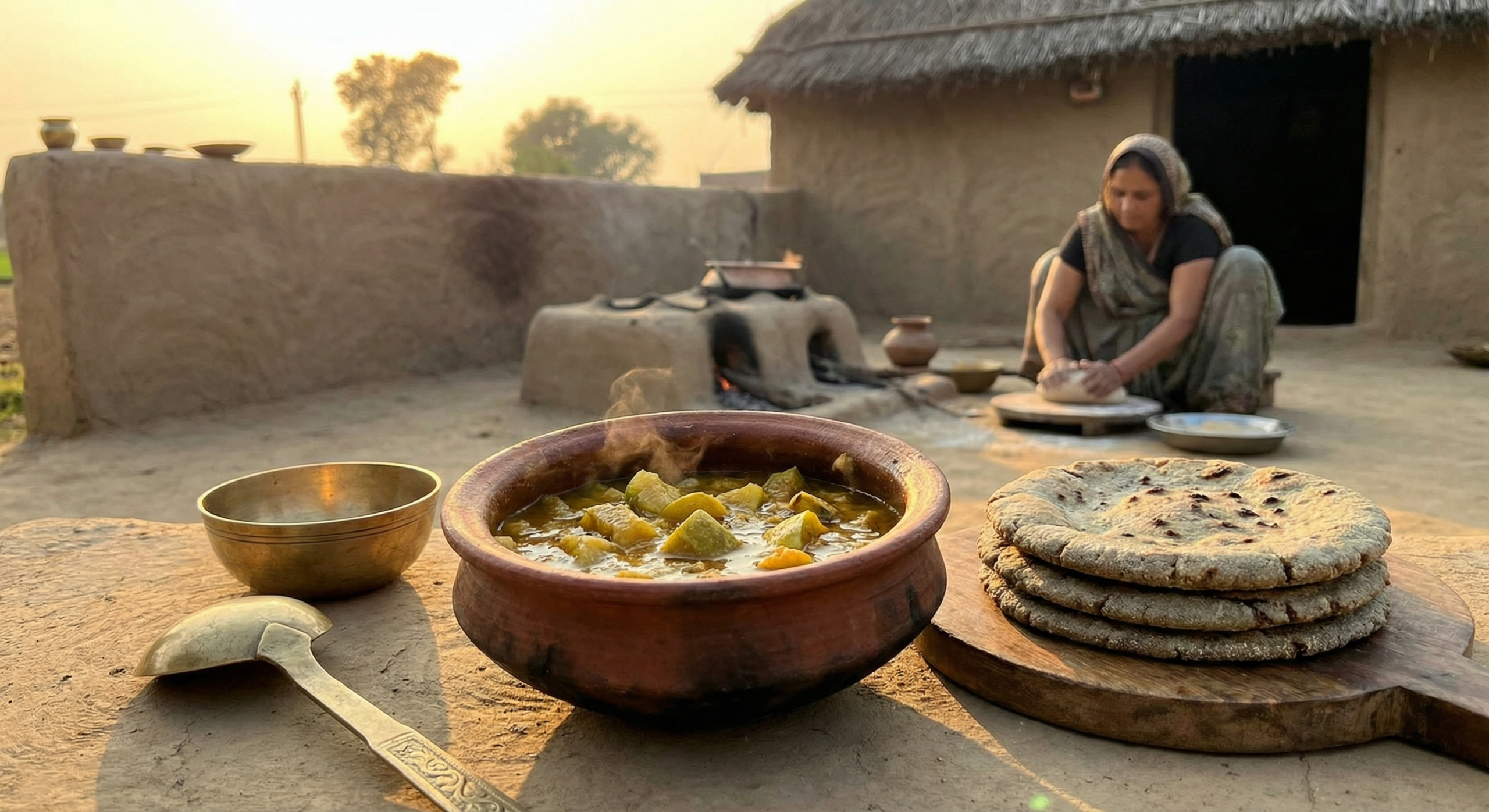
If you are craving a dish that cuts through the monotony of standard vegetable curries with a sharp, tangy punch and an earthy depth, this is it. Kachri Ki Sabzi is not just a side dish; it is the soul of Haryanvi pastoral cuisine.
Ingredients
The Core (Produce)
- 500g Fresh Kachri: Look for firm, small melons. If using sun-dried, soak them in warm water for 30 minutes first.
- 1 Cup Thick Yogurt (Curd): Freshly whisked until silky smooth.
The Aromatics & Base
- 2 Tbsp Mustard Oil: Essential for the authentic pungent undertone.
- 8-10 Cloves of Garlic: Crushed into a coarse paste (do not use store-bought fine paste).
- 1 Tsp Cumin Seeds (Jeera).
- A generous pinch of Asafetida (Hing).
The Magic (Spices)
- 1 Tsp Turmeric Powder.
- 1.5 Tsp Kashmiri Red Chili Powder: For a vibrant red hue without overwhelming heat.
- 1 Tbsp Coriander Powder.
- Salt to taste.
Step-by-Step Instructions
- The Bitterness Check: Wash the kachri thoroughly. Peel them lightly. Crucial: Slice a tiny bit off the end and taste it. Much like cucumbers, wild kachri can occasionally be bitter. If it is, discard that specific fruit. Slice the rest into rounds or small wedges.
- Tempering the Liquid Gold: Heat the mustard oil in a heavy-bottomed pan or iron kadhai until it reaches its smoking point. Turn off the heat for a minute to let the temperature drop slightly, then add the cumin seeds and hing. Sensory Check: The cumin should sizzle immediately and turn a nutty brown, filling the air with a toasted aroma.
- The Garlic Foundation: Add the coarse garlic paste. Sauté on medium-low heat. Sensory Check: You are looking for a pale golden color. The sharp raw smell of garlic must transition into a savory, sweet fragrance. Do not burn it, or the sauce will turn bitter.
- Sautéing the Wild Melon: Add the sliced kachri along with turmeric, red chili powder, and coriander powder. Toss well to coat every piece in the spiced oil. Cover and cook for 5–7 minutes. Sensory Check: The kachri should start to look translucent at the edges and release a slight amount of moisture.
- The Yogurt Tempering (The Critical Step): Lower the heat to the absolute minimum. Slowly pour in the whisked yogurt while stirring the pan constantly in one direction. Sensory Check: If the heat is too high or you stop stirring, the yogurt will curdle. Keep stirring until the mixture comes to a gentle simmer and looks like a cohesive, creamy sauce.
- The Finish: Simmer uncovered for another 8–10 minutes. Sensory Check: The dish is ready when you see tiny droplets of red-tinted oil (the rogon) separating and floating on the surface. The kachri should be tender enough to be easily cut with a spoon but still hold its shape.
The Story: Arid Gold and the Science of the Wild Melon
To understand Kachri Ki Sabzi, you must understand the landscape of Southern Haryana and Rajasthan. This is a region defined by scarcity, where the soil is sandy and the sun is relentless. In this environment, the Cucumis pubescens (Kachri) isn’t just a weed; it is a miracle of survival.
The Ecology of Resilience
Kachri is a drought-tolerant wild melon that thrives where other crops wither. It grows sprawling across the ground, its deep roots finding moisture in the most parched earth. For the pastoralists of Haryana, kachri was historically a “volunteer crop”—something that didn’t need to be sown but was gratefully gathered. In times of drought, when green leafy vegetables were non-existent, kachri was sliced and sun-dried (Kachri ki Phali), allowing families to enjoy a tangy vegetable curry in the middle of a scorching summer months after the harvest. This culture of preservation is why the flavor profile is so concentrated; it is the taste of the desert condensed into a small, brown fruit.
The “Protein Tenderizer” Science
Beyond its flavor, Kachri holds a secret known to traditional butchers and royal kitchens for centuries: it is one of nature’s most potent meat tenderizers. Kachri contains a high concentration of proteolytic enzymes. These enzymes work by breaking down the tough connective tissues and muscle fibers (collagen) in meat. In many Haryanvi and Rajasthani meat preparations, dried kachri powder is rubbed into goat or lamb hours before cooking. This results in meat that is “fork-tender” even when cooked over a simple wood fire. When cooked as a standalone sabzi, these same enzymes are believed to aid in the digestion of heavy grains like Bajra (Pearl Millet), making it the perfect functional food for a hard-working agrarian society.
Nutritional Profile
Kachri is a powerhouse of antioxidants. In traditional Ayurvedic practices within the region, it is valued for its “cooling” effect on the body, despite being served in a spicy gravy. It is rich in protein (especially the seeds) and provides essential minerals that are often stripped from the body through sweat in arid climates.
Frequently Asked Questions
Can I use dried kachri if fresh is not available?
Yes. In fact, many prefer the dried version for its more concentrated sourness. Ensure you soak dried kachri in warm water for at least 30 minutes before starting the recipe to rehydrate the fibers.
Why did my yogurt curdle in the gravy?
Yogurt curdles due to a thermal shock or high acidity. To prevent this, ensure the yogurt is at room temperature, whisk it thoroughly before adding, and keep the pan on low heat while stirring continuously until the sauce stabilizes.
Is Kachri the same as a regular cucumber?
While they are from the same family (Cucurbitaceae), they are different species. Kachri (Cucumis pubescens) is much smaller, has a tougher skin, and is significantly more acidic/sour than a standard salad cucumber.
What is the best bread to pair with Kachri Ki Sabzi?
The traditional pairing is Bajra ki Roti (Pearl Millet flatbread). The earthy, slightly sweet flavor of the millet perfectly offsets the sharp tang of the kachri and the pungency of the mustard oil.
How do I store kachri for long-term use?
Peel the kachri, slice them thinly, and spread them on a clean cloth under direct sunlight for 3-4 days until they are completely dehydrated and brittle. Store in an airtight jar for up to a year.
Can I make this recipe without garlic?
While garlic is a cornerstone of the Haryanvi flavor profile, you can omit it. However, you should increase the amount of Hing (Asafetida) to maintain a savory depth in the base.
Leave a Reply