
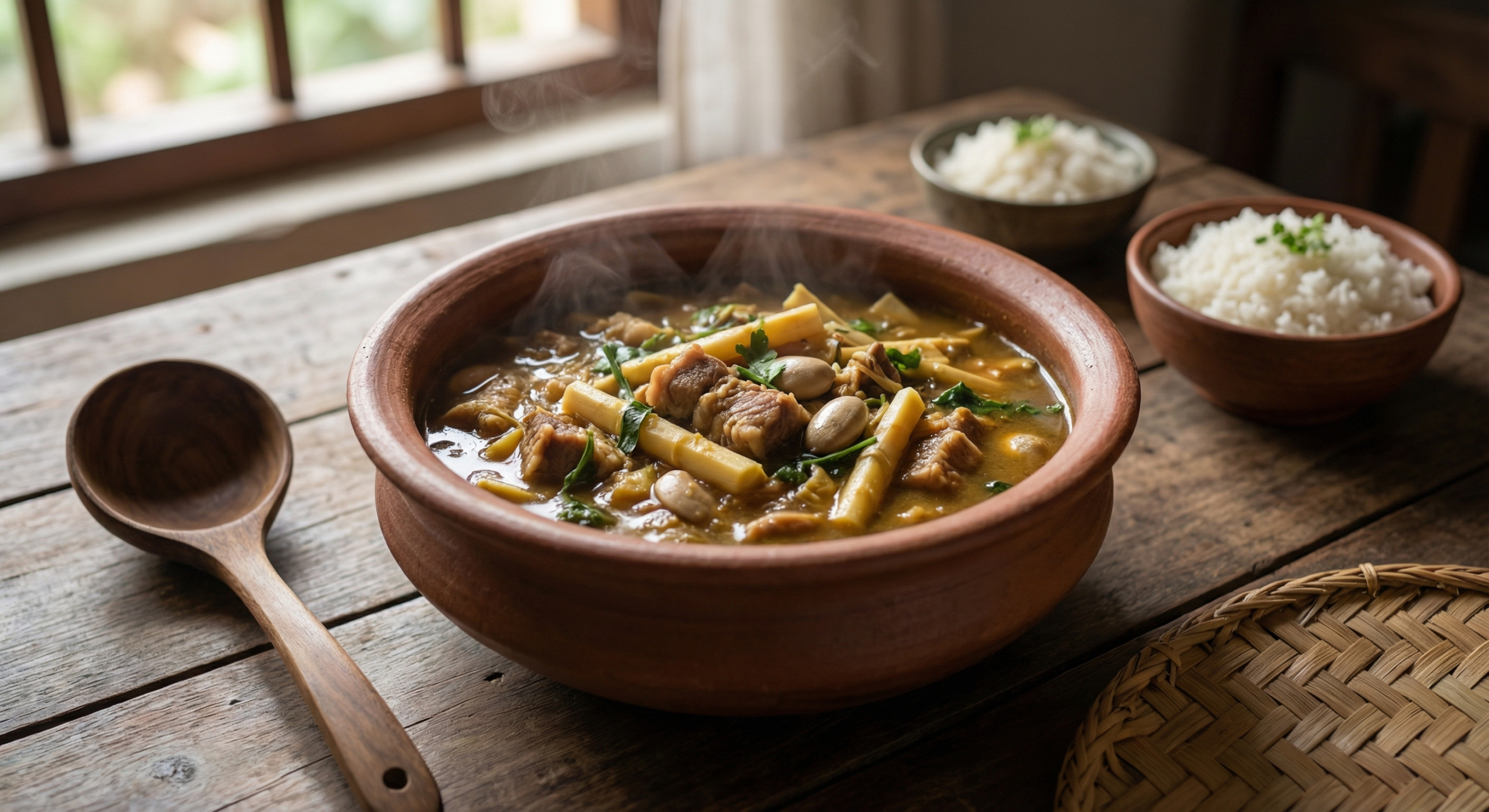
Experience the soul of North East India with this authentic, oil-free, and nutrient-dense stew from the hills of Tripura.
Authentic Tripura Chakhwi Recipe: The Healthy Oil-Free Bamboo Stew
Tripura, one of the “Seven Sister” states of Northeast India, offers a culinary landscape that is as vibrant as its culture. Among its most revered dishes is Chakhwi—a traditional stew that stands as a testament to the region’s philosophy of healthy, minimalist cooking. Unlike most mainstream Indian curries that rely heavily on oils and complex spices, Chakhwi is celebrated for being completely oil-free. It derives its deep, earthy flavors from fermented bamboo shoots, fresh green chilies, and a unique alkaline base known as Khar (traditionally made from banana peel ash, though often substituted with baking soda in modern kitchens).
Whether you choose to prepare it with pork, chicken, or as a purely vegetarian delight, Chakhwi is a nutritional powerhouse. The combination of bamboo shoots and jackfruit seeds creates a texture that is both crunchy and creamy, while the alkaline nature of the dish makes it incredibly easy on the digestive system. In this guide, we will walk you through the precise steps to recreate this Tripuri masterpiece in your own kitchen.
The Essential Ingredients
To achieve the authentic taste of Tripura, sourcing quality bamboo shoots is critical. If fresh bamboo shoots are unavailable, high-quality fermented or canned varieties can be used, provided they are rinsed thoroughly.
- Protein (Pork or Chicken): 500g, cut into bite-sized chunks. Pork with a little fat is traditional as it renders slightly, but lean chicken works perfectly for a lighter version.
- Fermented Bamboo Shoots: 1 cup, sliced or shredded. This is the heart of the dish.
- Jackfruit Seeds: 10-12 seeds, peeled and halved. These add a nutty, potato-like texture.
- Green Chilies: 6-8 (adjust to heat preference), slit lengthwise. Tripuri cuisine embraces heat.
- Ginger Paste: 1.5 tablespoons, freshly crushed.
- Baking Soda (Khar substitute): ½ teaspoon. This provides the signature alkaline flavor and helps soften the fibers.
- Rice Paste: 2 tablespoons (made by soaking and grinding rice). This acts as a thickening agent.
- Salt: To taste.
- Water: 3-4 cups.
- Fresh Coriander or Scallions: For garnish.
Step-by-Step Preparation Guide
Step 1: Preparing the Base
In a heavy-bottomed pot or a traditional earthen vessel, add the meat (pork or chicken) along with 3 cups of water. Bring the water to a boil over medium-high heat. As the meat begins to cook, you may notice some foam rising to the top; skim this off for a clearer broth.
Step 2: Adding the Aromatics and Alkali
Once the water is boiling, add the slit green chilies, ginger paste, and salt. Now, add the baking soda. You will notice a slight fizzing or foaming reaction—this is normal and essential for the Chakhwi’s distinct chemical profile and flavor. This alkaline environment helps break down the proteins and bamboo fibers, making them tender.
Step 3: Integrating the Bamboo and Seeds
Add the fermented bamboo shoots and the jackfruit seeds to the pot. Reduce the heat to medium-low, cover the pot, and let it simmer. The bamboo shoots will release their signature pungent aroma, which mellows into a savory umami flavor as it cooks with the meat.
Step 4: Simmering for Depth
Allow the stew to simmer for 25-30 minutes if using chicken, or 45-50 minutes if using pork. The meat should be succulent, and the jackfruit seeds should be tender enough to be pierced easily with a fork. If the water level drops too low, add a half cup of warm water to maintain a stew-like consistency.
Step 5: Thickening the Stew
Gradually stir in the rice paste. This will instantly thicken the broth, giving it a velvety texture that coats the ingredients. Let it cook for another 5 minutes on low heat, stirring occasionally to prevent the rice paste from sticking to the bottom.
Step 6: Finishing Touches
Turn off the heat. Garnish with freshly chopped coriander or green onions. Let the dish sit for 5 minutes before serving to allow the flavors to harmonize. Serve hot with steamed Jasmine or Basmati rice.
The Story of Chakhwi: Health, Culture, and Tradition
Chakhwi is more than just a recipe; it is a reflection of the indigenous Tripuri lifestyle. Historically, the tribes of Tripura relied on what the forest provided. Bamboo, being abundant, became a staple not just for construction, but as a primary food source. Bamboo shoots are low in calories but high in dietary fiber and minerals, making Chakhwi a perfect meal for those living active, agrarian lives.
Frequently Asked Questions
Can I make a vegetarian version?
Absolutely. You can substitute the meat with firm tofu, mushrooms, or even large chunks of pumpkin and papaya. The cooking process remains the same.
What if I can’t find jackfruit seeds?
While jackfruit seeds offer a unique texture, you can substitute them with halved baby potatoes or boiled chestnuts to maintain the starchy element of the dish.
Is bamboo shoot healthy?
Yes, bamboo shoots are rich in vitamins A, B6, and E, as well as calcium, magnesium, and potassium. They are also known for their anti-inflammatory properties.
Leave a Reply