
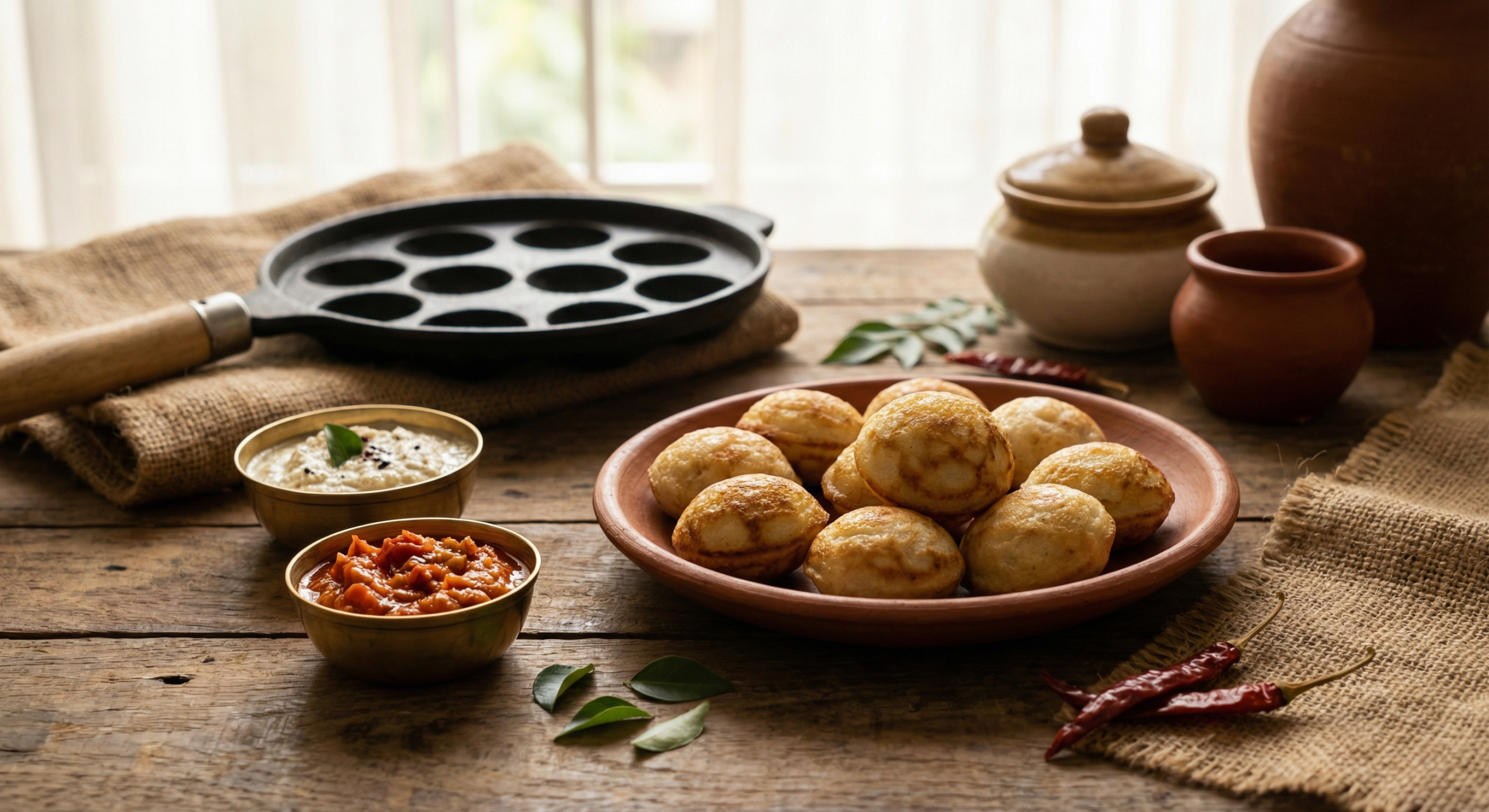
Vanakkam, foodie bestie! 🌿 If there’s one dish that perfectly captures the soul of a Tamil household, it’s not the giant Dosa or the fluffy Idli—it’s the humble, crispy, and utterly addictive Kuzhi Paniyaram. Imagine little golden spheres of fermented joy, crispy on the outside and soft as a cloud on the inside. Whether you like them spicy with a side of coconut chutney or sweet with the deep, dark notes of Karuppatti (palm jaggery), Paniyaram is the ultimate snack that bridges the gap between breakfast and evening tea. Ready to unlock the secrets of the special “kuzhi” pan? Let’s get rolling!
The Story of Paniyaram: From Chettiar Mansions to Your Kitchen
To find the true roots of Paniyaram, we have to travel to the majestic region of Chettinad in Tamil Nadu. The Nattukottai Chettiars, historically a community of powerful merchants and global traders, were the ultimate foodies of their time. They traveled across Southeast Asia—Ceylon (Sri Lanka), Burma, and Malaysia—and brought back not just wealth, but a sophisticated palate. Paniyaram was born in their sprawling ancestral mansions, where grandmas would supervise massive batches being fried in cast-iron pans to feed dozens of cousins during summer holidays.
The word “Kuzhi” literally means “hole” or “cavity,” referring to the special pan (Paniyara Kal) used to cook them. Historically, this wasn’t just a random breakfast dish; it was a way to practice the zero-waste philosophy. When the Idli or Dosa batter would get a little too sour after a couple of days, the clever women of the household would transform it! They’d temper it with mustard seeds, curry leaves, and crunchy chana dal to make the savory version, or mix in some jaggery and cardamom for a sweet treat.
But Paniyaram is more than just a clever use of leftovers. In Tamil culture, it carries a deep sense of hospitality. Offering a guest a plate of hot Paniyarams with a spicy Kara Chutney is a sign of affection. In many villages, “Karuppatti Paniyaram” (made with palm jaggery) is a must-have during the rainy season, believed to give strength and warmth. It’s a dish that demands patience—each little dumpling has to be flipped by hand with a thin wooden stick, a rhythmic dance that has been passed down through generations of mothers and daughters.
Today, while you can find Paniyaram in high-end restaurants across Chennai and Bangalore, nothing beats the charm of a “Paniyaram Cart” on a street corner in Madurai or Karaikudi. The hissing sound of the batter hitting the hot oil, the smell of roasted onions, and the sight of a vendor skillfully flipping fifty of them at once is pure culinary theater. When you eat a Paniyaram, you’re tasting centuries of Chettinad heritage and the warmth of Tamil hospitality.
The Authentic Chettinad Kuzhi Paniyaram Recipe
This recipe focuses on the Savory (Kara) Paniyaram, which is a crowd favorite for breakfast or an evening snack.
- Prep time: 10 mins (plus fermentation)
- Cook time: 20 mins
- Serves: 4 hungry foodies
Ingredients:
- 3 cups fermented Idli/Dosa batter (slightly sour works best!)
- 1 large onion, finely chopped
- 2 green chilies, minced
- 1 inch ginger, finely grated
- A handful of fresh curry leaves, chopped
- 2 tbsp fresh coriander, chopped
- For Tempering:
- 1 tsp mustard seeds
- 1 tsp Urad dal
- 1 tsp Chana dal (Bengal gram)
- A pinch of Asafoetida (Hing)
- 2 tsp oil
- Oil or Ghee for frying in the pan
Instructions:
- The Tadka: Heat 2 tsp of oil in a small pan. Add mustard seeds. When they pop, add the Urad dal, Chana dal, and Hing. Fry until the dals turn golden brown.
- Sauté the Aromatics: Add the chopped onions, green chilies, ginger, and curry leaves. Sauté for 3-4 minutes until the onions are translucent. We don’t want them brown, just soft!
- Mix the Batter: Pour this tempered mixture into your fermented batter. Add the fresh coriander and give it a good mix. Adjust salt if needed (remember, your batter already has salt).
- Prep the Pan: Heat your Paniyaram pan (iron or non-stick) on medium flame. Add a few drops of oil or ghee into each cavity.
- The Pour: Fill each cavity about 3/4th full with the batter. Don’t overfill, or they won’t have room to grow!
- The Flip: Cover and cook for 2-3 minutes. Once the edges look golden and crispy, use a wooden stick or a spoon to gently flip them over.
- The Finish: Cook the other side for another 2 minutes without the lid until golden. They should look like perfectly round, toasted balls.
- Serve: Serve hot with Coconut Chutney or a spicy Tomato-Onion (Kara) Chutney.
FAQs: Everything You Need to Know!
1. Do I need a special pan for this?
Yes, you do! You need a “Kuzhi Paniyaram Kal” or an Appe pan. Cast iron is traditional and gives the best crust, but non-stick works if you’re a beginner.
2. Can I use store-bought Idli batter?
Absolutely! Just make sure it’s at room temperature and slightly fermented. If it’s too fresh, the Paniyarams might be a bit flat.
3. How do I make the sweet version?
Simple! Instead of the onions and spices, mix in some jaggery syrup, cardamom powder, and fresh coconut bits into the batter. Cook them with Ghee for an heavenly aroma!
4. My Paniyarams are sticking to the pan! Help!
If you’re using an iron pan, it needs to be well-seasoned. Make sure the pan is hot enough before pouring the batter, and don’t skimp on the oil for the first batch.
5. Are Paniyarams healthy?
They are much healthier than deep-fried snacks! They use very little oil and are made from fermented grains, which are great for your gut health. You can even add grated carrots or beets to the batter for a veggie boost.
Go ahead, give these a try and bring a piece of Tamil Nadu to your breakfast table! Don’t forget to tell me—are you Team Sweet or Team Savory? 🥥🌶️✨
Leave a Reply