
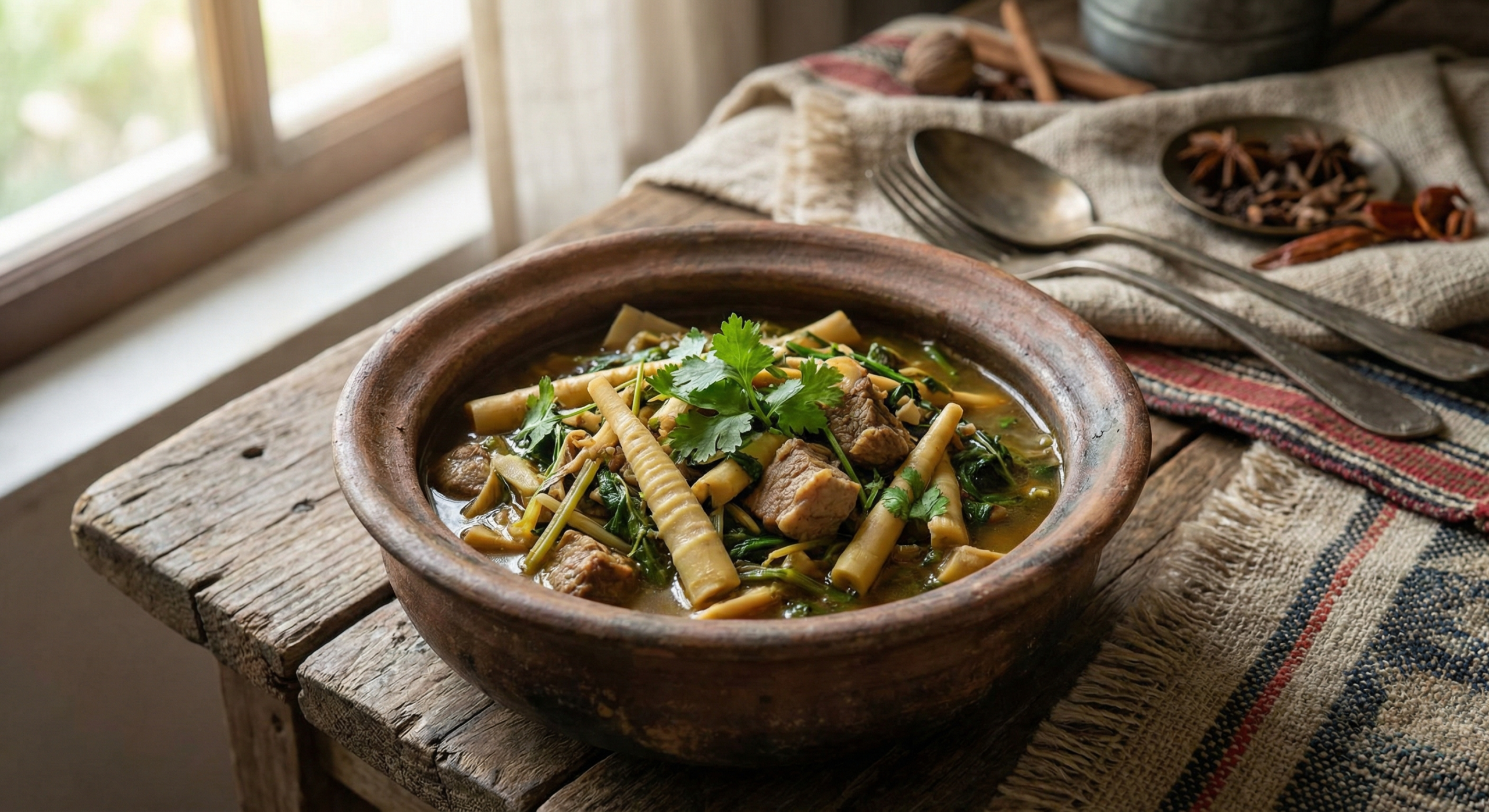
Hey there, foodie bestie! 👋 Today, we’re embarking on a flavor expedition to the misty, rolling hills of Mizoram. If you’ve ever wanted to taste a dish that feels like a warm hug from a mountain forest, you’re in the right place. We’re talking about Mizo Bai—the undisputed king of Mizo comfort food. This isn’t just a stew; it’s a lifestyle, a cultural anchor, and quite possibly the healthiest thing you’ll eat all year! So, grab your virtual apron, and let’s dive into the smoky, fermented magic of the Northeast.
The Story of Bai: From Jhum Fields to Family Tables
To understand Bai, you first have to understand the rugged, beautiful terrain of Mizoram. For centuries, the Mizo people have practiced Jhum cultivation (slash-and-burn farming). This ancient rhythm of life means that the Mizo kitchen is deeply seasonal and intensely local. When you walk into a traditional Mizo home, the first thing that hits you isn’t the smell of frying oil (traditional Mizo cooking uses almost zero oil!) but the earthy, pungent aroma of fermentation and woodsmoke.
Bai is the ultimate expression of this “forest-to-table” philosophy. Historically, it was a way to use every bit of the harvest. Those cauliflower stalks you usually throw away? In Mizoram, they’re the star of a specific type of Bai! The dish evolved as a communal meal—a one-pot wonder that could be thrown together after a long day in the fields. It’s simple, yes, but its complexity comes from three “secret weapons” that every Mizo grandma swears by.
First, there’s Chingal. Imagine an ingredient that makes everything taste “older” and deeper. It’s essentially water dripped through the ashes of burnt wood (usually oak or bamboo). It acts as a natural tenderizer and gives the stew a unique alkalinity. Then comes the Sa-um—fermented pork fat that provides a funky, umami depth that’ll make your taste buds do a double-take. And finally, Bekang—fermented soybeans that are basically the Mizo version of Japanese natto. These ingredients aren’t just flavorings; they’re the historical DNA of the Mizo people, preserved through the art of fermentation to survive the lean seasons.
Eating Bai is a lesson in mindfulness. It’s about tasting the bitterness of local greens (like lengmaser), the heat of the legendary Bird’s Eye Chili, and the creamy texture of mountain rice. It’s a dish that connects the modern Mizo youth to their ancestors who cleared these very hills. When you sip a bowl of Bai, you’re not just eating vegetables; you’re tasting the resilience of a tribe that has lived in harmony with these wild hills for generations.
The Authentic Mizo Bai Recipe
This version is a classic Vegetable Bai, using ingredients you can find (or substitute) while keeping the soul of the dish intact.
- Prep time: 15 mins
- Cook time: 25 mins
- Serves: 3-4 hungry foodies
Ingredients:
- 2 cups mixed greens (mustard leaves, spinach, or bok choy)
- 1 cup cauliflower stalks and florets, chopped
- 1 medium potato, cubed
- 1/2 cup French beans, snapped into pieces
- 4-5 green chilies (use Bird’s Eye if you’re brave!)
- 1 tsp salt (adjust to taste)
- A pinch of baking soda (a modern substitute for Chingal)
- 1 tbsp fermented soybean paste (Bekang) OR a small piece of fermented pork (Sa-um)
- 3 cups water
- 1/2 cup cooked rice (to thicken the stew)
Instructions:
- The Boil: In a large pot, bring the 3 cups of water to a rolling boil. Add your salt and that tiny pinch of baking soda.
- The Aromatics: Toss in the smashed green chilies and your fermented ingredient (Bekang or Sa-um). Let this boil for 2-3 minutes until the water starts smelling “interesting.”
- The Hearty Bits: Add the potatoes, cauliflower stalks, and beans. Cover and cook for about 10 minutes or until the potatoes are fork-tender.
- The Greens & Rice: Stir in your mixed greens and the cooked rice. The rice will slightly break down, giving the Bai its signature silky body.
- The Finish: Simmer for another 5-7 minutes. You want the vegetables to be soft but not complete mush.
- Serve: Pour into deep bowls and serve piping hot with a side of steamed rice. No oil, no spices, just pure Mizo goodness!
FAQs: Your Bai Queries Answered!
1. Is Bai always vegetarian?
Nope! While many versions are vegetable-forward, Mizos often add smoked pork, dried fish, or even beef to their Bai. It’s a very versatile “whatever-is-in-the-pantry” kind of dish.
2. What can I use if I can’t find Chingal?
As mentioned in the recipe, a tiny pinch of baking soda does the trick! It helps break down the fibers of the vegetables and mimics the alkaline nature of the traditional ash-water.
3. Why does it smell so strong?
That’s the magic of fermentation! The Bekang (soybeans) and Sa-um (pork fat) are fermented, which gives off a pungent aroma similar to blue cheese or miso. Once you taste it, though, you’ll see it’s all about that deep umami flavor.
4. Is Mizo Bai spicy?
It can be! Mizoram is home to some of the hottest chilies in the world. However, the heat in Bai is a “clean” heat from fresh chilies, not the heavy heat from dried spice powders.
5. Can I make Bai without the fermented ingredients?
Technically yes, but it won’t be authentic. If you really can’t handle the funk, you can add a bit of ginger-garlic paste for a different kind of kick, but try to find some fermented bean paste (like Miso) for a closer match!
And there you have it! Your very own guide to the soul of Mizoram. Let me know in the comments if you’re brave enough to try the fermented pork fat version! Until next time, stay hungry! 🍜✨
Leave a Reply