
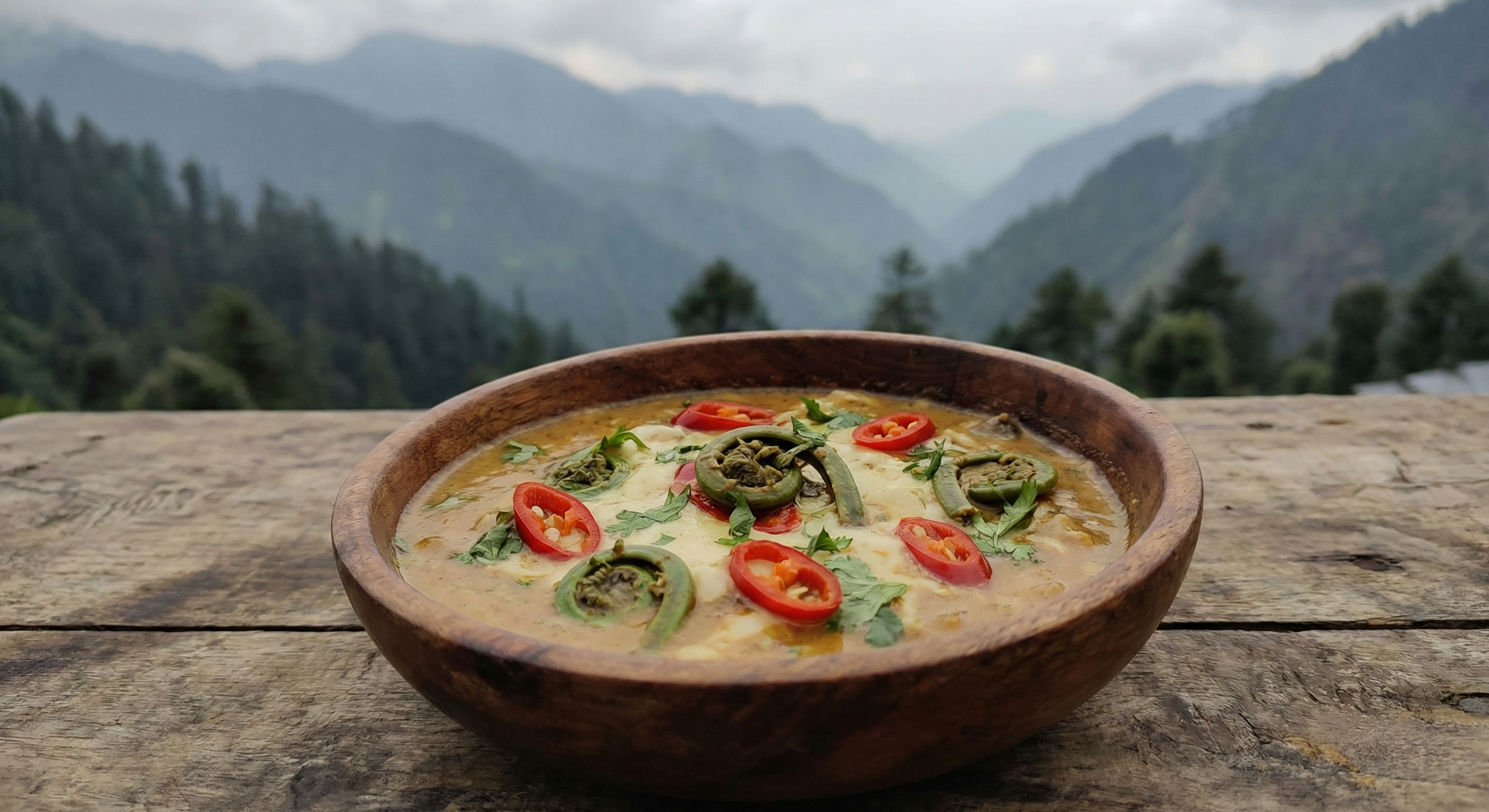
I know we love the comforting embrace of a classic paneer butter masala or a creamy palak paneer, but there is a world of Himalayan flavors that remains largely undiscovered by the mainstream palate. If you are looking for a dish that offers more than just sustenance—a dish that provides literal warmth and a window into the high-altitude survival culture of the Northeast—then the Chura Sabji Recipe is your gateway. Hailing from the pristine heights of Arunachal Pradesh, specifically from the Monpa community, this Arunachal Yak Cheese Curry is a masterclass in minimalist, high-impact cooking. It is a pungent, spicy, and deeply fermented stew designed to kickstart thermogenesis and keep the body fueled against the biting cold of the Tawang plateau.
Ingredients: The Core, The Aromatics, and The Magic
To master the Chura Sabji, one must respect the ingredients. This is not a dish of complex spice blends or heavy masalas; it is a dish defined by the quality of its fermentation and the intensity of its heat.
The Core (Produce)
- 150g Yak Cheese (Churpi): The soul of the dish. Use the soft, fermented variety, not the hard rock-candy type. It provides the signature pungency and creamy texture.
- 200g Seasonal Vegetables: Traditionally spinach, radish (daikon), or green beans. They add crunch and absorb the cheesy broth.
- 1 Cup Water or Vegetable Stock.
The Aromatics & Heat
- 1 Tbsp Ginger & Garlic: Roughly crushed (not fine paste) for rustic bursts of heat.
- 1-2 Bhut Jolokia (King Chili): The “thermogenic” engine. Use less if you have a low heat tolerance, but the heat is essential to the authentic experience.
- 1 Tbsp Yak Butter or Mustard Oil: For sautéing.
- Salt to taste.
Step-by-Step: Sensory Checks for the Perfect Chura Sabji
- The Aromatics Sauté: Heat the butter/oil in a pan. Add the crushed ginger and garlic. Sensory Check: Sauté until the raw smell disappears and it turns pale gold. Do not brown it heavily.
- The Vegetable Base: Toss in the chopped seasonal vegetables. Sauté for 2-3 minutes until they glisten.
- The Cheese Meld: Crumble the fermented yak cheese into the pan. Pour in the water. Sensory Check: As it simmers, the kitchen will fill with a strong, funky, fermented aroma. The cheese won’t fully melt like cheddar; it will form a creamy, slightly grainy suspension.
- The Heat Infusion: Add the Bhut Jolokia. Simmer on low heat for 10-12 minutes.
- The Finish: The curry is ready when the vegetables are tender and a layer of fat (sheen) separates on top of the creamy broth.
The Story: High Altitude, Monpa Culture, and Fermentation
To eat Chura Sabji is to understand the geography of Arunachal Pradesh. The Monpa people, who primarily inhabit the Tawang and West Kameng districts, live in a landscape where resources must be preserved and every ingredient must serve a functional purpose.
The Science of Thermogenesis
In the high Himalayas, food is fuel in the most literal sense. The combination of high-fat yak cheese and high-capsaicin chilies in Chura Sabji creates a “thermogenic” effect. This metabolic process increases the body’s heat production. For a Monpa herder or a mountain farmer, this dish is the difference between a restless, cold night and a warm, restorative sleep.
Frequently Asked Questions
Can I substitute Yak Cheese?
While Yak Cheese is unique, you can approximate the flavor by mixing a strong, pungent goat cheese with a little bit of blue cheese for that fermented “funk.”
Is Bhut Jolokia too spicy?
Yes, it is extremely hot. Remove the seeds to reduce heat, or substitute with a standard bird’s eye chili if you prefer a milder curry.
Leave a Reply