Ven Pongal: The Savory Ghee-Laced Comfort of Tamil Nadu
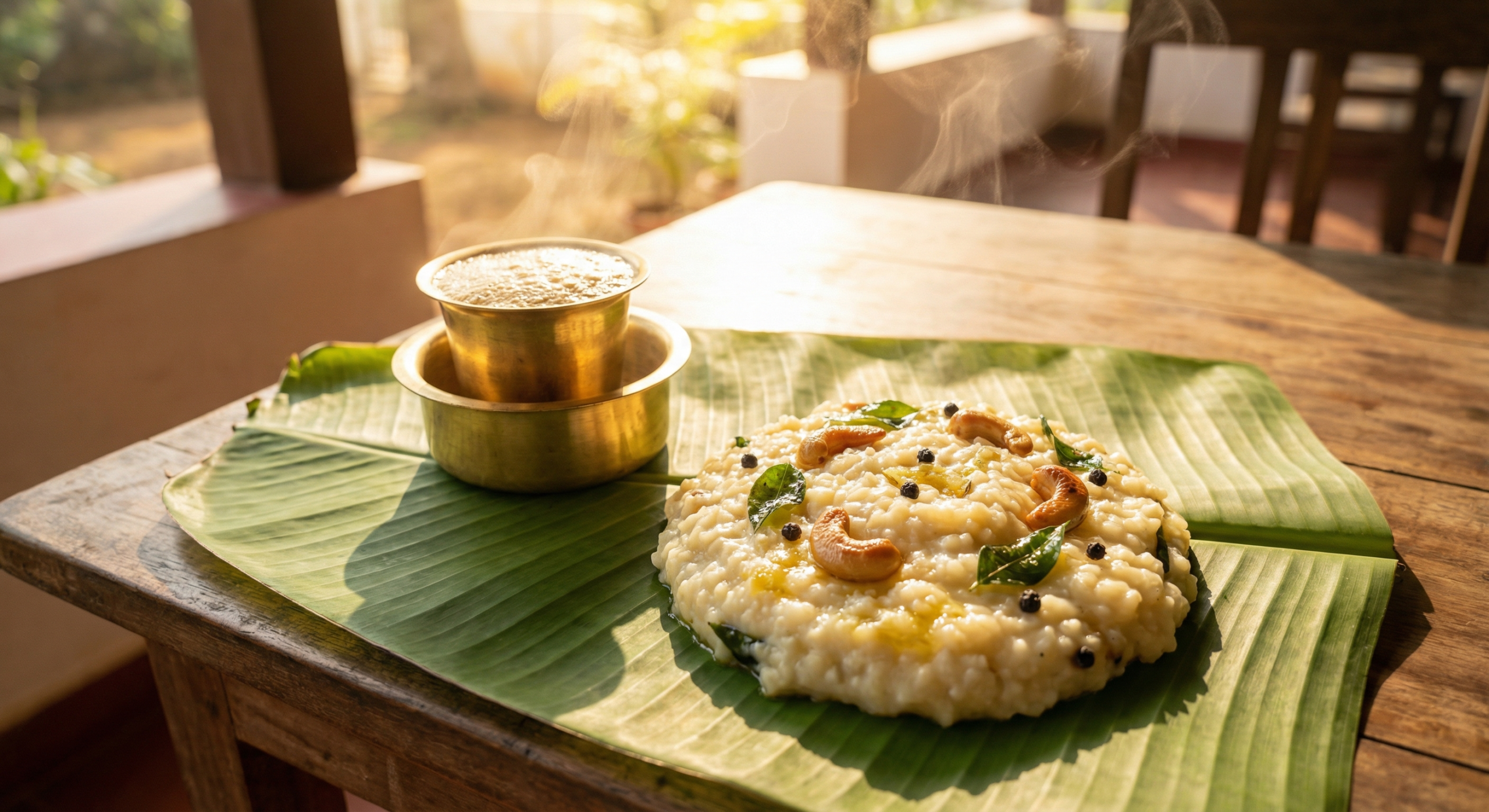
In the quiet early hours of a South Indian morning, long before the sun reaches its peak, the sound of a pressure cooker whistle and the sharp, peppery aroma of tempering spices signal the start of the day. This is the scent of Ven Pongal (or Khara Pongal), a dish that is the culinary equivalent of a warm hug. Simple, wholesome, and deeply satisfying, Ven Pongal is the quintessential comfort food of Tamil Nadu.
The Meaning of Abundance
The word “Pongal” in Tamil literally means “to boil over” or “overflowing,” representing prosperity and abundance. While the sweet version (Sakkarai Pongal) is famous during the harvest festival, Ven Pongal (“Ven” meaning white) is the daily staple. Historically, it was an offering (Prasadam) in the grand temples of the Chola and Pandya empires. Today, it remains the most popular breakfast across Tamil Nadu, usually served with a splash of spicy Sambar and creamy Coconut Chutney.
Key Ingredients
- The Base: Raw rice and split yellow Moong Dal (Payatham paruppu).
- The Fat: Pure Ghee (Neyyi) is the soul of this dish. Don’t be shy with it!
- The Tempering (Tadka): Whole black peppercorns (Milagu), cumin seeds (Jeeragam), and curry leaves.
- The Crunch: Roasted cashews.
- The Secret: Freshly grated ginger and a pinch of Hing (Asafoetida).
Step-by-Step Cooking Instructions
- Dry Roast the Dal: Lightly roast the moong dal in a pan until it becomes aromatic and turns a very pale gold. This step prevents the dal from becoming too mushy and adds a nutty depth.
- Pressure Cooking: Wash the rice and roasted dal. Add them to a pressure cooker with about 4 to 4.5 cups of water for every cup of rice-dal mix. The goal is a soft, mashable consistency. Add salt and a pinch of turmeric (optional). Cook for 4-5 whistles.
- Mash it Up: Once the pressure settles, open the lid and gently mash the rice and dal while they are still hot. They should blend into a creamy, semi-solid mass.
- The Royal Tempering: In a small pan, heat a generous amount of ghee. Add the cashews first and fry until golden. Remove them. In the same ghee, add cumin seeds, whole peppercorns (slightly crushed for more heat), grated ginger, and curry leaves. Add the hing at the very end.
- The Final Mix: Pour this aromatic, sizzling ghee mixture over the mashed rice and dal. Add the fried cashews. Fold everything together gently.
- Serving: Serve immediately while steaming hot. In a traditional setting, it is served on a banana leaf with a dollop of extra ghee on top.
The Art of the Peppercorn
There is a standing joke in Tamil households about the “hidden peppercorns” in Pongal—the surprise bite of heat that keeps you awake. If you prefer a milder flavor, you can coarsely crush the peppercorns, but purists insist on whole ones. The heat of the pepper, the coolness of the ginger, and the richness of the ghee create a perfect Ayurvedic balance for a morning meal.
Frequently Asked Questions (FAQ)
Is Ven Pongal the same as Khichdi?
They are similar in that they use rice and dal, but the textures and spices are different. Khichdi often includes vegetables and turmeric, while Ven Pongal is more minimal, focusing on the trio of ghee, pepper, and cumin.
Can I use Basmati rice?
Traditional Ven Pongal is made with short-grain raw rice (Sona Masuri or Ponni). Basmati is too aromatic and doesn’t mash as well as the local varieties.
Why is my Pongal turning hard?
Pongal tends to thicken as it cools. Always use a high water-to-grain ratio (at least 4:1) and add a little hot water if you need to reheat it.
Leave a Reply