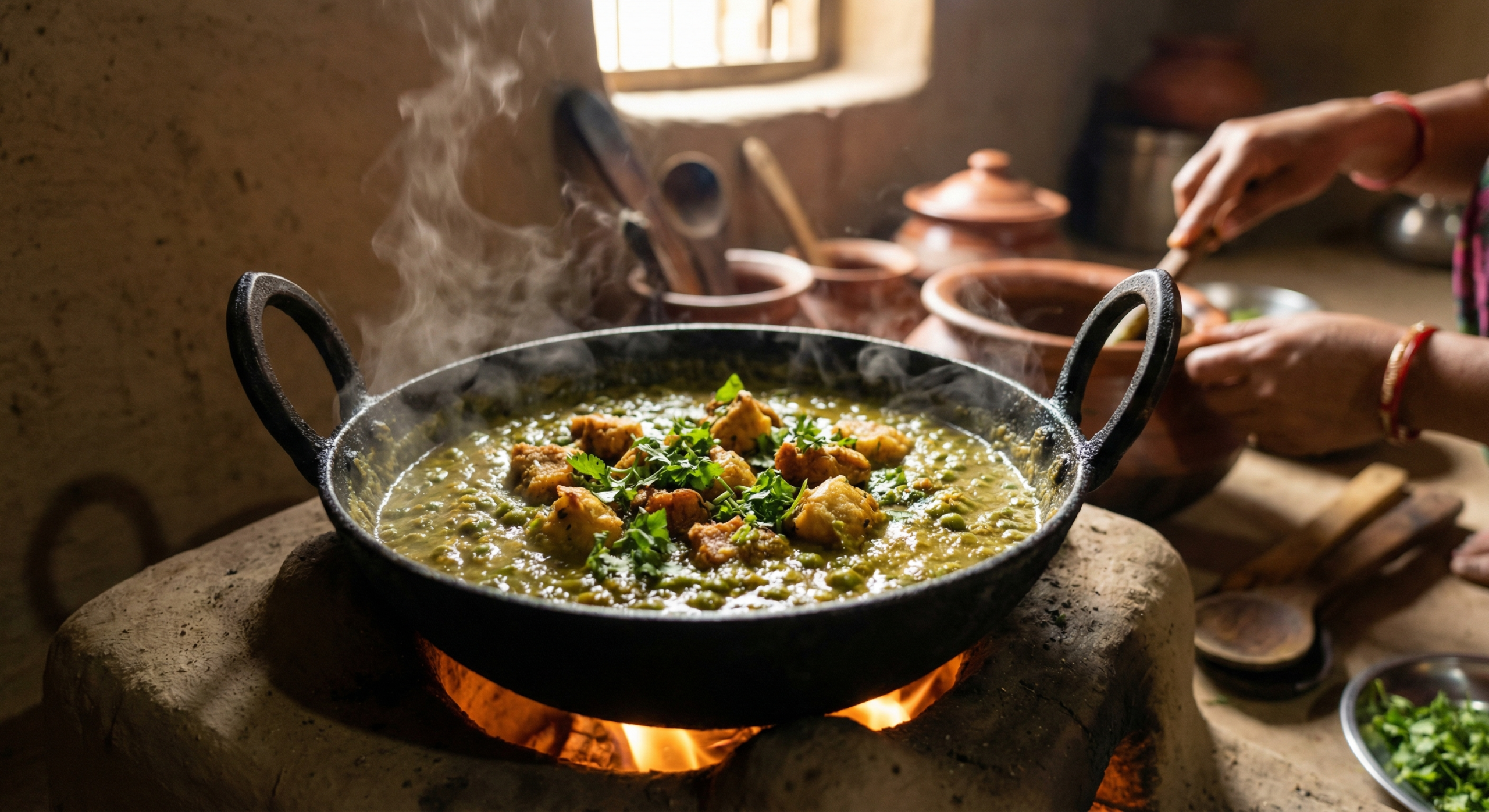
Matar Ka Nimona: The Emerald Winter Stew of Uttar Pradesh
When the first chill of winter hits the plains of Uttar Pradesh, a peculiar but intoxicating aroma begins to waft from every household kitchen. It is the scent of fresh, tender green peas being crushed and simmered with rustic spices. This is Matar Ka Nimona, a dish that is less of a curry and more of a celebration of the winter harvest. For those from the Hindi heartland, Nimona isn’t just food; it’s a nostalgic journey back to sunny afternoons spent shelling peas in the courtyard.
The Rustic Soul of Nimona
Unlike the smooth, creamy matar paneer or the structured aloo matar, Nimona is characterized by its coarse, grainy texture and deep green hue. Originating from the eastern parts of Uttar Pradesh and neighboring Bihar, it was historically a “farmer’s dish.” It makes use of the most abundant winter crop—fresh green peas—turning them into a thick, soul-warming stew. In traditional homes, the peas are still ground on a sil-batta (flat stone grinder) to achieve the perfect consistency that a modern blender often misses.
Key Ingredients
- The Star: Fresh Green Peas (Matar). Frozen peas can be used in a pinch, but the sweetness of fresh winter peas is irreplaceable.
- The Base: Potatoes (Aloo) and sometimes Mangodi or Wadi (sun-dried lentil dumplings).
- The Green Paste: A blend of fresh coriander leaves, green chilies, and ginger.
- Spices: Cumin seeds, Hing (Asafoetida), Turmeric, and a touch of Garam Masala.
- Cooking Medium: Mustard oil is essential for that authentic, pungent punch.
Step-by-Step Cooking Instructions
- The Pea Paste: Grind about 3/4 of the peas into a coarse paste. Keep the remaining 1/4 of the peas whole to add texture to the stew.
- Frying the Base: Heat mustard oil in a kadhai until it smokes. Fry cubed potatoes and lentil wadis (if using) until golden brown. Remove and set aside.
- Sautéing the Paste: In the same oil, add cumin and a generous pinch of hing. Add the coarse pea paste and sauté it on low heat. This is the most crucial step—you must sauté until the raw smell of peas disappears and the paste darkens slightly.
- Adding Aromatics: Stir in the green coriander-ginger-chili paste. Add turmeric and salt.
- The Simmer: Return the fried potatoes and whole peas to the pan. Add water to achieve a medium-stew consistency. Cover and let it simmer until the potatoes are tender and the oil starts to float on top.
- The Finish: Sprinkle a little garam masala and a dollop of ghee before serving.
- Serving: Nimona is traditionally served with piping hot steamed rice or thick, handmade rotis.
Why Texture Matters
The secret to a great Nimona lies in the “bhuna” (sautéing) of the pea paste. If undercooked, the dish tastes grassy. If overcooked, you lose the vibrant green color. The goal is a perfect balance where the sweetness of the peas meets the earthy depth of mustard oil and hing. It is a humble dish that demands patience and a keen sense of smell.
Frequently Asked Questions (FAQ)
Can I make Nimona with frozen peas?
Yes, you can, but since frozen peas are blanched, the flavor will be slightly different. Add a pinch of sugar to mimic the sweetness of fresh peas.
Is Nimona vegan?
The core recipe is vegan if you use oil for cooking. Skip the final dollop of ghee to keep it strictly plant-based.
What is the difference between Nimona and Matar Curry?
Standard Matar curries use whole peas in an onion-tomato base. Nimona uses a coarse pea paste as the base itself, giving it a unique, thick texture.
Leave a Reply