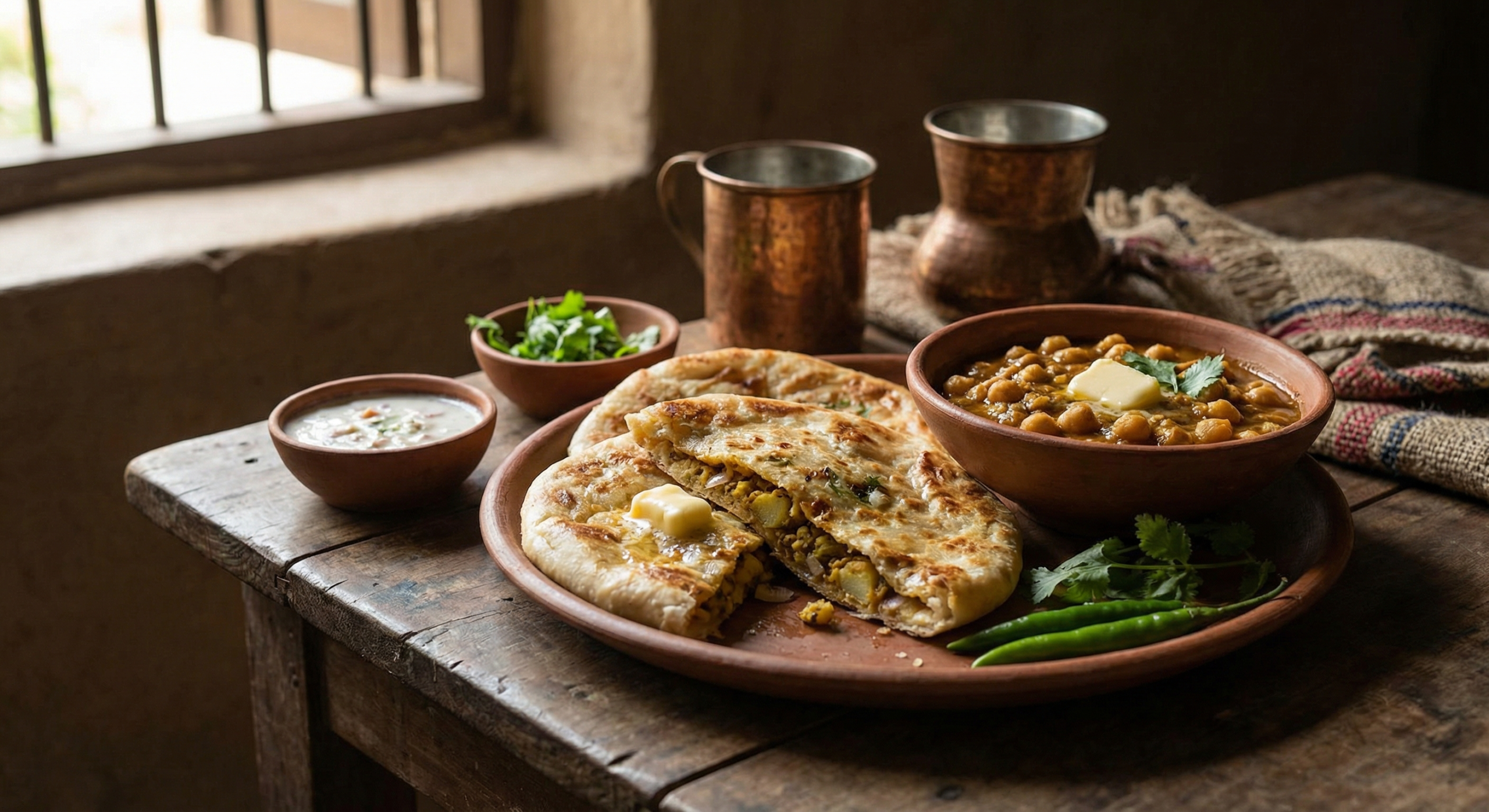
Sat Sri Akal, foodie bestie! 👋 If there is one dish that can make a grown person weep with joy at 9 AM, it is a fresh-out-of-the-tandoor Amritsari Kulcha. We’re not talking about those soft, bready things you find in grocery stores. No, no. We are talking about the layered, flaky, butter-dripping marvel that defines the culinary heart of Punjab. Whether you’re in the holy city of Amritsar or the modern streets of Chandigarh, the Kulcha is more than just bread—it’s a crispy testament to the Punjabi spirit. Ready to get your hands messy? Let’s roll!
The Story of the Kulcha: From Mughal Royalty to Street Legend
To find the true origins of the Kulcha, we have to look back at the royal kitchens of the Mughal Empire. Historically, the Kulcha evolved from the flatbreads of Central Asia. Legend has it that the Mughal Emperor Shah Jahan was so fond of this bread that it became his daily breakfast staple. In fact, the Kulcha was so revered that the Nizams of Hyderabad even had it featured on their official flag! But while the Mughals gave it a royal start, it was the people of Amritsar who gave the Kulcha its “soul.”
Historically, Amritsar has always been a city of pilgrims and travelers. The Kulcha evolved as the perfect “complete meal” for anyone visiting the Golden Temple. It needed to be hearty, flavorful, and filling. Local bakers (nanbais) began experimenting with the dough, adding layers of ghee (clarified butter) to create a flaky, puff-pastry-like texture. They stuffed it with spicy mashed potatoes, cauliflower, or paneer, and cooked it in a clay tandoor at blistering temperatures. The result? A bread that shatters when you touch it, revealing a steaming, spicy heart.
There are legendary spots in Amritsar that have been serving the same recipe for over a century. Take Bharawan Da Dhaba, for instance, which started near the Town Hall in 1912. Or Kulcha Land, which traces its roots back to pre-partition Lahore. These places aren’t just eateries; they are custodians of a tradition. The water in Amritsar is often credited for the unique taste of the dough, but the real secret lies in the “seven-fold” layering technique and the generous—borderline aggressive—amount of butter applied the moment the Kulcha leaves the tandoor.
Today, the Amritsari Kulcha is so iconic that the Punjab government is even seeking a Geographical Indication (GI) tag for it! It represents the generosity and warmth of Punjabi hospitality. When you sit down at a dhaba, you’re often served with a side of spicy Chole (chickpeas), tangy Imli Pyaz ki Chutney (tamarind and onion chutney), and a large dollop of fresh white butter. It’s a meal that demands you slow down and enjoy the crunch. When you bite into a Kulcha, you’re tasting centuries of royal history and the vibrant, beating heart of Punjab. It’s not just breakfast; it’s an emotion.
The Authentic Amritsari Kulcha Recipe
This recipe focuses on the classic Aloo (Potato) Kulcha. The secret is in the layering—don’t skip the butter!
- Prep time: 45 mins (plus resting)
- Cook time: 20 mins
- Serves: 3-4 hungry Punjabis
Ingredients:
- For the Dough:
- 2 cups All-purpose flour (Maida)
- 1/2 tsp Baking powder + a pinch of Baking soda
- 1/2 cup Yogurt (Dahi)
- 1 tsp Sugar and 1 tsp Salt
- 2 tbsp Ghee (for the dough) + extra for layering
- For the Stuffing:
- 3 large boiled potatoes, mashed
- 2 green chilies, minced
- 1 tsp Anardana (dried pomegranate) powder – The Secret Ingredient!
- 1 tsp Ajwain (carom seeds)
- A handful of fresh coriander, chopped
- 1 tsp Red chili powder & 1 tsp Garam masala
Instructions:
- The Dough: Mix flour, baking powder, soda, salt, and sugar. Add yogurt and ghee, and knead into a soft dough using warm water. Let it rest for 1 hour.
- The Stuffing: Mix the mashed potatoes with all the spices, chilies, and lots of fresh coriander. Make sure there are no large lumps!
- The Layering: Roll out the dough into a large rectangle. Spread ghee all over, sprinkle a little flour, and fold it. Repeat this 3 times to create layers. Rest for another 15 minutes.
- The Assembly: Take a small ball of dough, stuff it with the potato mixture, and seal it carefully.
- The Rolling: Gently roll it out (or pat it with your hands) into a circle. Sprinkle some coriander leaves and kalonji (nigella seeds) on top.
- The Bake: If you don’t have a tandoor, use a heavy iron tawa. Stick one side with water and place it on the hot tawa. Once it bubbles, flip the tawa directly over the gas flame to roast the top until charred and crispy.
- The Finish: Remove and immediately crush the Kulcha with your hands (careful, it’s hot!) and slather with a massive dollop of butter.
FAQs: Your Kulcha Curiosities Answered!
1. Why is Anardana used in the stuffing?
Anardana (dried pomegranate seeds) gives that signature tangy, slightly crunchy kick that Amritsari Kulchas are famous for. It cuts through the richness of the butter perfectly!
2. Can I make this on a non-stick pan?
You can, but it won’t be as crispy. A traditional iron tawa allows you to stick the bread to it and flip it over the flame, mimicking the heat of a clay tandoor.
3. Why do you crush the Kulcha after cooking?
Crushing it (the “chur-chur” style) breaks the layers and allows the butter to seep deep into every nook and cranny. It’s also much easier to eat that way!
4. Is there a difference between Naan and Kulcha?
Yes! Naan is usually plain or topped with garlic, whereas Kulcha is traditionally stuffed. Also, authentic Kulchas are often layered (laccha) to give them that flaky texture.
5. What is the best side dish for this?
While Chole are classic, a simple bowl of thick yogurt or some spicy Punjabi mixed pickle is all you really need to make this a feast.
Go ahead, make your own tandoor-style Kulcha at home and feel the Punjabi vibe! Don’t forget the extra butter! 🧈🔥✨
Leave a Reply