
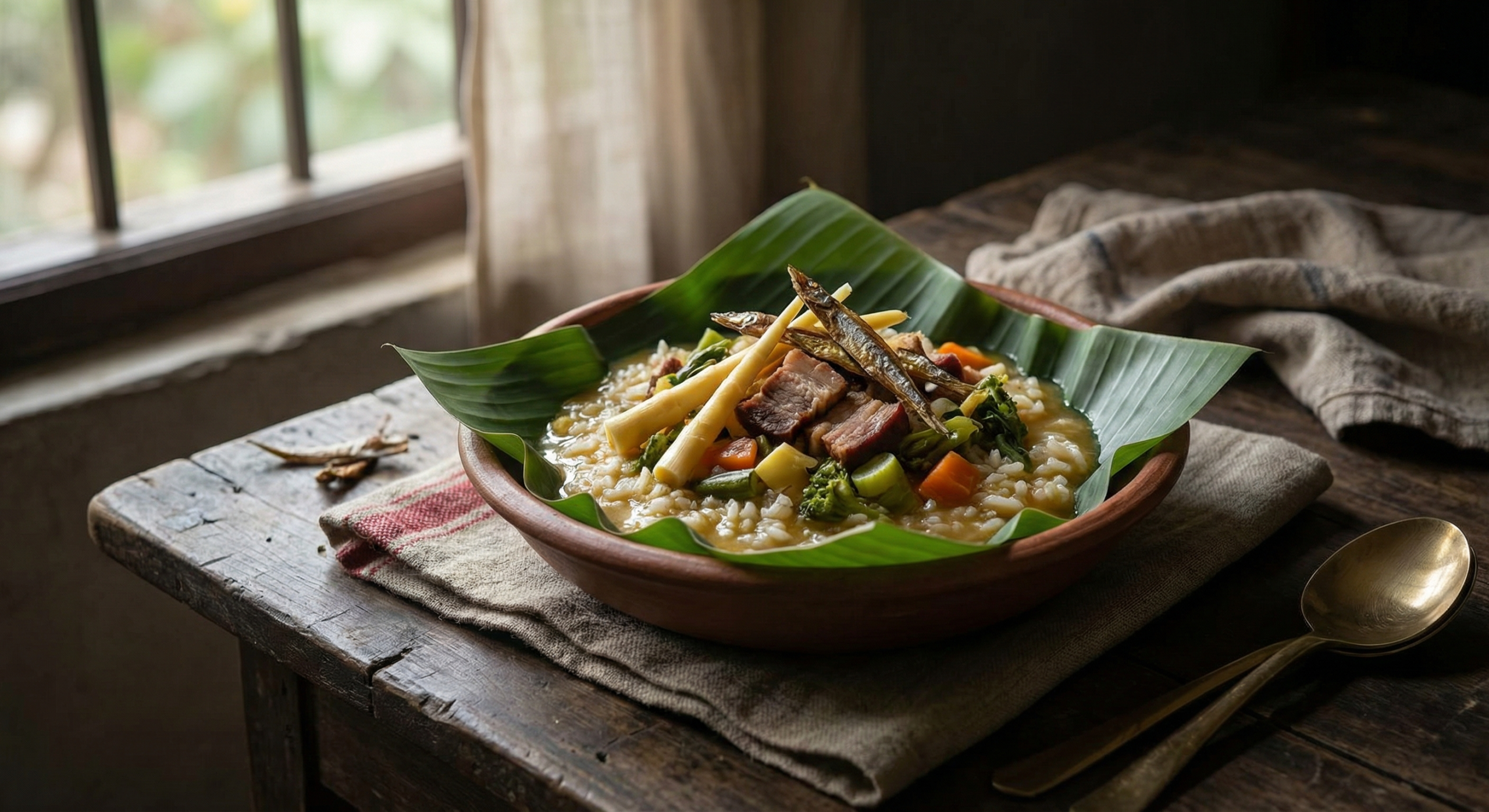
Hey there, foodie bestie! 👋 Today, we are traveling to the misty green mountains of Nagaland to taste a dish that is the ultimate definition of soul food. We’re talking about Nagaland Galho. If you think you know what rice porridge or khichdi tastes like, think again. Galho is a vibrant, one-pot wonder that combines local rice, wild herbs, and—most importantly—a touch of that legendary Naga “funk” from fermented soybeans or smoked meat. It’s hearty, healthy, and incredibly satisfying. Ready to warm up your kitchen? Let’s get cooking!
The Story of Galho: A Tribal Hug in a Bowl
To understand Galho, you have to look at the vibrant tribal culture of Nagaland, particularly the Angami and Chakhesang tribes. Historically, the Naga people have lived in close harmony with the wild, rugged terrain of the Northeast. Their kitchen is a reflection of the forest and the field. Galho was born as a communal meal—a way to use whatever was fresh and available. Whether it was the rice from the terraced fields or the wild edible greens foraged from the hillside, Galho was the dish that brought everyone together around the hearth.
In a traditional Naga home, the kitchen is the heart of the house, and the wooden mortar and pestle are the most important tools. Historically, Galho was cooked slowly over a wood fire, allowing the local “sticky” rice to break down and absorb the flavors of the wild herbs. While Galho is often compared to the North Indian Khichdi, it is unique because it uses almost zero oil and no traditional Indian spices like cumin or turmeric. Instead, the flavor comes from Akhuni (fermented soybeans) or Bastenga (fermented bamboo shoot). These ingredients give the dish a pungent, umami depth that is the signature of Naga cuisine.
But Galho isn’t just about survival; it’s about celebration and resourcefulness. Historically, there are many versions of Galho. There’s the simple vegetable version for everyday lunch, and then there’s the celebratory version loaded with smoked pork or beef. One of the most interesting historical variations is made using Himalayan Knotweed and other medicinal herbs, making it a “healing bowl” for anyone feeling under the weather. It’s the kind of dish that a grandmother would prepare with love, knowing that every leaf and grain was packed with the energy of the mountains.
Today, Galho remains a staple in Naga households, especially during the rainy season when the hills are lush with fresh greens. It’s a dish that represents the pride of the Naga people—their deep knowledge of the land and their love for bold, honest flavors. When you sit down with a bowl of Galho, you’re not just eating rice; you’re tasting the spirit of the Naga hills. It’s smoky, it’s earthy, and it’s a beautiful reminder that the best meals are often the simplest ones. It’s more than just a porridge; it’s a tribal legacy in every spoonful.
The Authentic Nagaland Galho Recipe
This is a Vegetarian Galho recipe that uses easily available greens while keeping the authentic Naga soul alive.
- Prep time: 15 mins
- Cook time: 30 mins
- Serves: 3-4 hungry foodies
Ingredients:
- 1 cup Local Red Rice or any short-grain sticky rice
- 2 cups mixed greens (spinach, mustard leaves, or bok choy)
- 1 medium potato, cubed
- 1 tbsp Fermented Soybean paste (Akhuni) – The Star! (or use Miso as a sub)
- 3-4 Green Chilies, smashed
- 1 inch Ginger, smashed
- 1 tsp Salt (adjust to taste)
- 5 cups Water
- Optional: 1/2 cup Smoked Tofu or Mushrooms for extra umami
Instructions:
- The Base: Wash the rice thoroughly. In a large, deep pot, add the rice and 5 cups of water. Bring to a boil.
- The Aromatics: Add the smashed ginger, smashed green chilies, and salt. Let it boil on medium heat for 10 minutes.
- The Veggies: Toss in the cubed potatoes. If you’re using mushrooms or tofu, add them now too.
- The Funk: Add the fermented soybean paste (Akhuni). Stir it well so it dissolves into the water. This will give the Galho its characteristic aroma.
- The Slow Cook: Lower the heat and let it simmer until the rice is very soft and the mixture has a thick, porridge-like consistency (about 15-20 minutes). Stir occasionally so the bottom doesn’t burn.
- The Greens: Once the rice is nearly done, stir in your chopped mixed greens. Let them wilt into the porridge for 3-4 minutes.
- Serve: Serve piping hot in deep bowls. It’s traditionally eaten just as it is, or with a side of Naga chili chutney!
FAQs: Navigating the Naga Kitchen!
1. What can I use if I can’t find Akhuni?
Akhuni has a very strong, pungent smell (like blue cheese). If you can’t find it, a good quality Miso paste or even a bit of fermented bean curd can provide a similar umami depth, though the aroma will be different.
2. Why is there no oil in this recipe?
Traditional Naga cooking is very healthy and relies on boiling, steaming, and smoking rather than frying. The richness comes from the fermented ingredients and the rice itself.
3. Can I use Basmati rice for Galho?
You can, but it won’t have the same texture. Galho is meant to be creamy and slightly sticky, which is why short-grain or local red rice is preferred. If you use Basmati, add a bit more water and cook it until it over-softens.
4. Is Galho very spicy?
It depends on how many Naga chilies you add! The heat in Galho is meant to be warming, but you can always adjust the chilies to suit your palate.
5. Is it a breakfast or dinner dish?
In Nagaland, Galho is versatile! It’s a popular lunch in the fields, a comforting dinner on a rainy night, and even a quick breakfast. It’s the ultimate “anytime” meal.
Go ahead, give this Naga classic a try and let the mountain flavors take over! Until next time, stay curious! 🏔️🥣✨
Leave a Reply