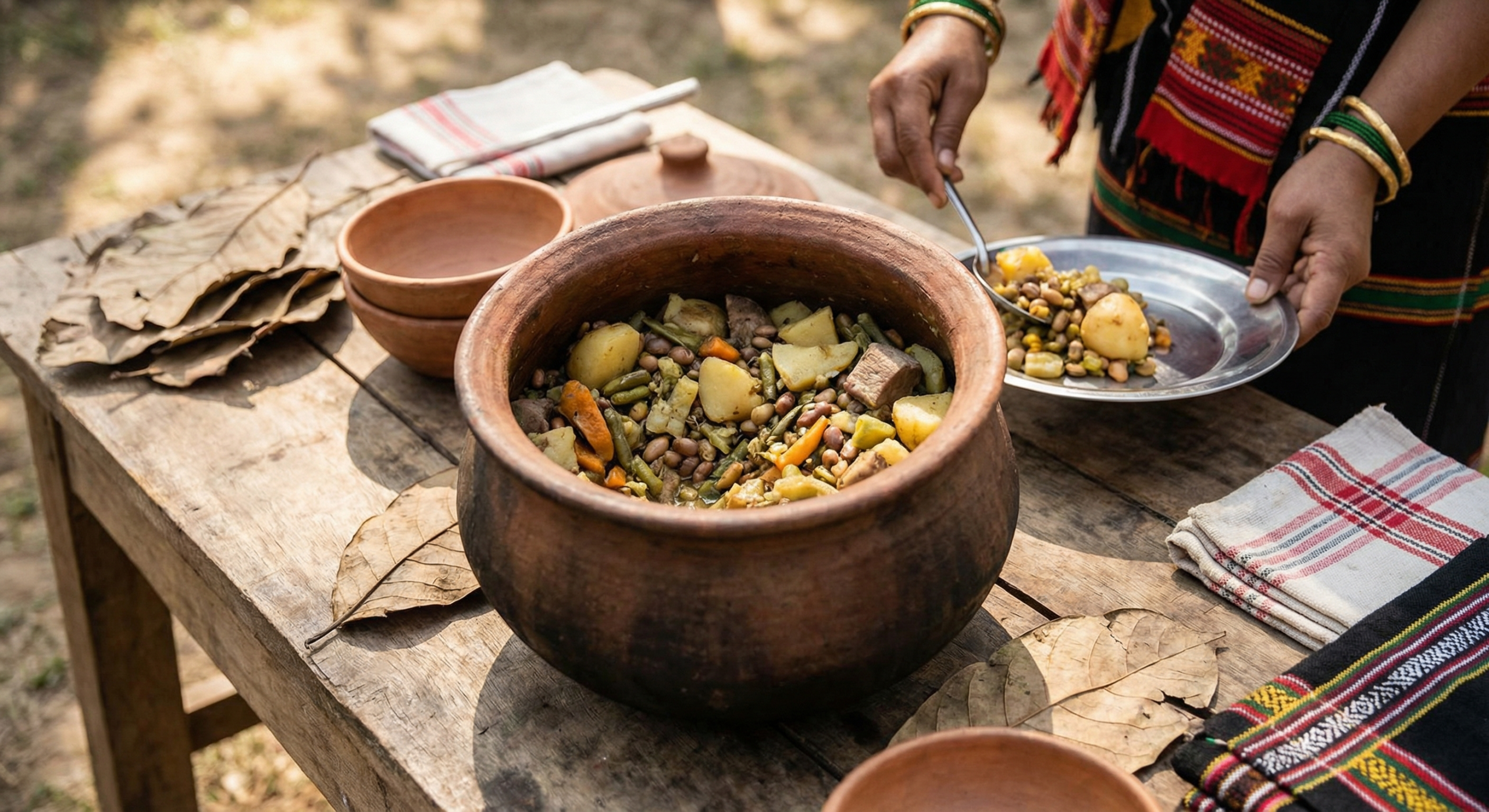
Hey there, foodie bestie! 🌿 When the winter breeze starts blowing through the palm groves of Dadra and Nagar Haveli, something magical happens. People stop cooking on stoves and start digging holes in the ground! Welcome to the world of Ubadiyu. Often called the “rustic cousin” of the famous Gujarati Undhiyu, Ubadiyu is a smoky, earthy, and oil-free feast that is cooked upside down in a clay pot buried in the earth. It’s the ultimate farm-to-table experience that’ll make you fall in love with winter vegetables all over again. Let’s get digging!
The Story of Ubadiyu: A Tribal Tradition of Earth and Fire
To understand Ubadiyu, you have to look at the tribal heart of Dadra and Nagar Haveli and the neighboring Valsad district in Gujarat. Historically, this region is home to tribes like the Dhodias, Dublas, and Koknas. These communities have a deep, spiritual connection to the land. Ubadiyu wasn’t born in a royal palace; it was born in the fields. After the winter harvest, farmers would gather to celebrate the bounty of the earth by cooking the vegetables exactly where they grew—in the soil itself.
The name “Ubadiyu” comes from the word “ubadu,” which refers to the act of cooking in an inverted pot. Historically, this was a brilliant way to cook without needing a proper kitchen or even oil. You take a clay pot (matka), stuff it with seasonal tubers and beans, seal it with special leaves, and bury it in a pit covered with hay and dung cakes. The hay is set on fire, and the vegetables steam in their own juices, infused with the intense smokiness of the fire and the earthy aroma of the clay pot. It’s ancient, sustainable, and purely delicious.
But there’s a secret to the perfect Ubadiyu that every tribal elder knows: Kalar and Kamboi leaves. These wild leaves are used to line the pot and act as a seal. They don’t just hold the steam in; they impart a unique, medicinal fragrance that defines the dish. Historically, Ubadiyu was a communal event. Entire villages would come together during the winter months, especially around the Makar Sankranti festival, to share these pots. It was a way to bond, celebrate the harvest, and stay warm during the chilly nights. It’s a dish that reminds us that some of the best flavors come from the simplest elements: earth, fire, and fresh produce.
Today, Ubadiyu has moved from the tribal farms to the highways. If you drive down NH-48 during winter, you’ll see dozens of roadside stalls with smoke rising from the ground, selling hot Ubadiyu to travelers. It’s become a winter ritual for everyone in the region. Unlike Undhiyu, which can be heavy and oily, Ubadiyu is seen as a “clean” and healthy way to enjoy the winter harvest. When you peel back the charred skin of a potato or bite into a smoky Surti Papdi bean from an Ubadiyu pot, you’re tasting centuries of tribal wisdom and the pure, smoky soul of the land.
The Authentic Dadra Ubadiyu Recipe
This is a “Home-Style” version that you can make in your oven or on a gas stove, mimicking the smoky, earthy flavors of the original!
- Prep time: 30 mins
- Cook time: 45 mins
- Serves: 4 hungry winter-feasters
Ingredients:
- 250g Surti Papdi (flat beans), stringed
- 250g Purple Yam (Kand/Ratalu), cubed
- 2 medium Potatoes & 2 Sweet Potatoes, cubed
- 1/2 cup Fresh Toovar (pigeon pea) pods
- The Green Masala:
- 1 cup fresh Coriander
- 1/2 cup Green Garlic (essential!)
- 4-5 Green Chilies
- 1 inch Ginger
- 1 tbsp Ajwain (carom seeds) – The Star!
- Salt to taste
- A bunch of fresh Kamboi or Lemongrass leaves (to line the pot)
- A clay pot (if possible) or a thick-bottomed cooker
Instructions:
- The Masala: Grind all the “Green Masala” ingredients into a coarse paste. Do not add water! The moisture from the greens is enough.
- The Marinade: In a large bowl, toss all the vegetables and tubers with the green masala paste. Ensure everything is well-coated. Let it sit for 20 minutes.
- The Pot Prep: Line the bottom and sides of your clay pot (or cooker) with a thick layer of Kamboi leaves or Lemongrass. This prevents burning and adds that signature aroma.
- The Stuffing: Pack the marinated vegetables tightly into the pot. Top it with more leaves to seal it.
- The Cooking (Gas Stove): If using a cooker, do not add water. Place it on a very low flame and cook for 40-45 minutes. The vegetables will steam in their own moisture.
- The Smoking: To get that authentic smoky flavor, light a small piece of charcoal, place it in a small bowl inside the pot after cooking, drizzle a drop of oil, and seal it for 5 minutes.
- Serve: Serve hot with a spicy green chutney and a glass of refreshing buttermilk.
FAQs: Your Ubadiyu Handbook!
1. How is Ubadiyu different from Undhiyu?
The main difference is the cooking method! Undhiyu is usually sautéed in a lot of oil with fried dumplings (muthiya). Ubadiyu is oil-free, cooked upside down, and gets its flavor from the smoky fire and special wild leaves.
2. Can I make this without green garlic?
Green garlic (fresh garlic with its stalks) is what gives Ubadiyu its iconic winter flavor. If you can’t find it, you can use regular garlic and spring onion greens, but try to find the real deal for the best experience!
3. What are Kamboi leaves?
Kamboi is a wild shrub found in the Gujarat/Dadra region. It has a very specific aromatic oil. If you aren’t in the region, Lemongrass or even corn husks can be a decent substitute for the layering.
4. Is Ubadiyu healthy?
Extremely! Since it uses zero oil and relies on the natural steam of the vegetables, it is one of the healthiest traditional Indian feasts you can have. It’s also gluten-free and vegan!
5. Can I use any other vegetables?
Tubers are the stars here because they hold up well to the long cooking time. You can also add small brinjals (eggplants) with a cross-cut, stuffed with the green masala.
Go ahead, give this smoky winter feast a try! It’s like a warm hug from the earth itself. 🌿🔥✨
Leave a Reply