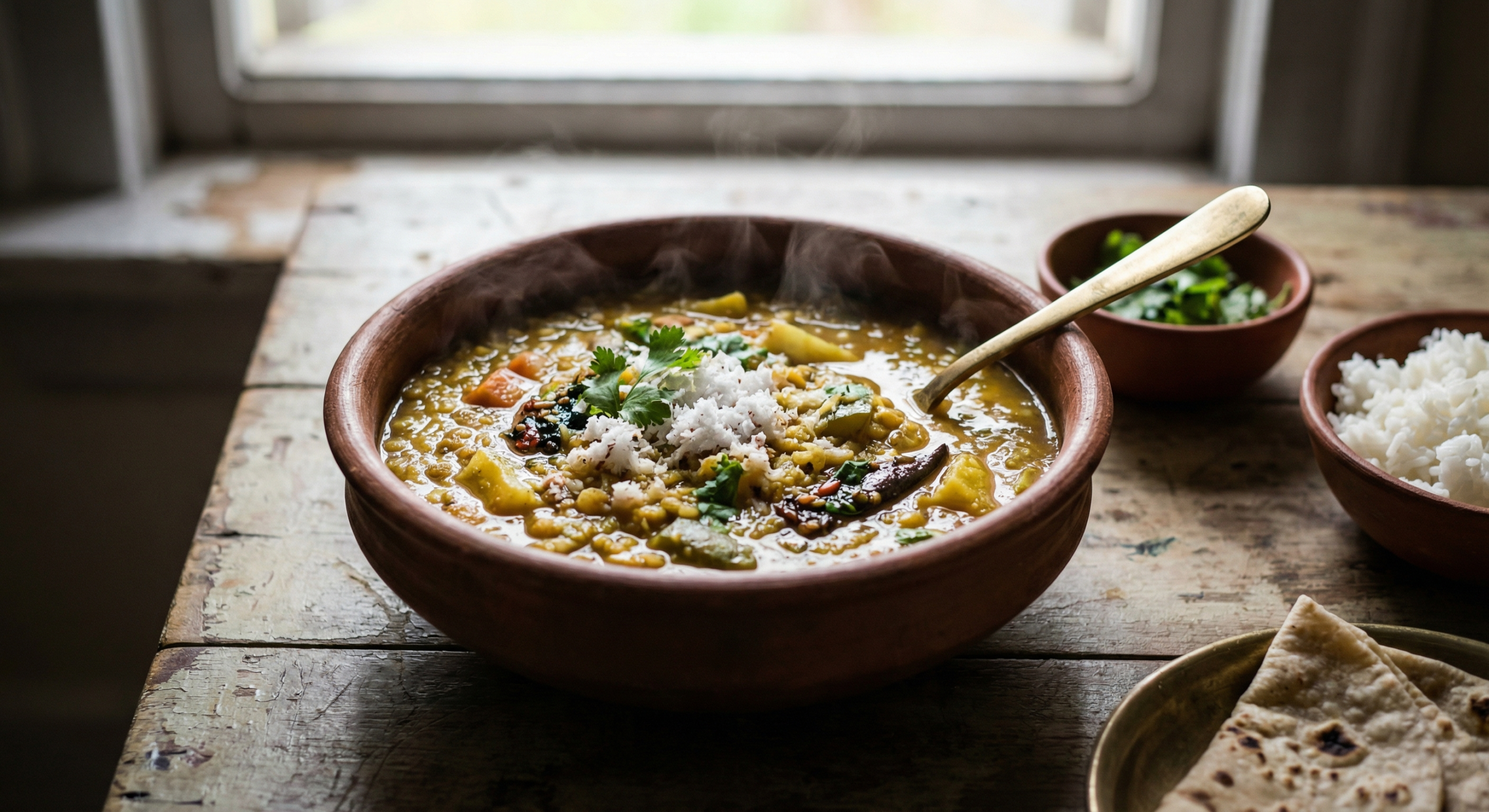
Jay Jagannath, foodie bestie! 🙏 Today, we are traveling to the holy coastal state of Odisha to uncover the secrets of a dish that is as much a spiritual experience as it is a culinary one. Welcome to the world of Odisha Dalma. Forget your regular yellow dal. Dalma is a majestic, protein-packed stew of lentils and native vegetables, flavored with a unique roasted spice blend and a touch of fresh coconut. It’s the ultimate comfort food that has been nourishing kings, pilgrims, and commoners for over a thousand years. Let’s get soulful!
The Story of Dalma: A Gift from the Tribes to the Temple
To understand Dalma, you have to look at the heart of Odia culture—the Jagannath Temple in Puri. Historically, Dalma is a cornerstone of the “Chappan Bhog” (56 sacred offerings) presented to Lord Jagannath every single day. But the origin of this dish is even older than the temple itself. Legend has it that Dalma was a gift from the Savaras, the powerful ancient tribes of Odisha, who were the original worshippers of Lord Jagannath (then known as Neela Madhava). The dish reflects the tribal wisdom of the forest: a simple, wholesome mixture of lentils and whatever vegetables the earth provided.
In the temple kitchen—the largest in the world—Dalma is cooked in massive clay pots (kudua) stacked on top of each other over wood fires. The steam from the bottom pot cooks the ones above it! Historically, temple Dalma is unique because it strictly forbids certain “foreign” ingredients. You won’t find potatoes, tomatoes, or green chilies in the authentic temple version, as these were introduced to India much later by traders. Instead, they use native treasures like raw banana (kancha kadali), yam (deshi aloo), pumpkin (baigana), and papaya. The creaminess comes from the slow breakdown of the lentils and a generous topping of fresh grated coconut.
But there’s a secret weapon that gives Odia Dalma its soul-stirring aroma: Bhaja Chenna (roasted spice powder). Every Odia grandmother has her own ratio of cumin and dried red chilies, dry-roasted on an iron tawa and ground into a coarse, smoky powder. This isn’t just a garnish; it’s the historical fingerprint of the dish. Added right at the end, it transforms the simple boiled dal into a complex, earthy masterpiece. In Odia culture, Dalma is the great equalizer. Whether you are at a grand wedding feast or in a humble village home, a bowl of Dalma is the ultimate sign of hospitality and love.
Today, Dalma is more than just a recipe; it’s the identity of Odisha on a plate. It’s the first thing an Odia person craves when they return home from a long journey. It’s a dish that carries the scent of the temple, the warmth of the coastal sun, and the ancient wisdom of the forest tribes. When you eat Dalma with a mound of steaming rice and a dollop of ghee, you’re not just eating a meal; you’re participating in a thousand-year-old tradition of devotion and simplicity. It’s a liquid blessing in every bite.
The Authentic Odisha Dalma Recipe
This is the classic “Gharaua” (Home-Style) Dalma, using native vegetables and the iconic roasted spice powder.
- Prep time: 20 mins
- Cook time: 30 mins
- Serves: 4 hungry foodies
Ingredients:
- 1 cup Toor Dal (split pigeon peas) – you can also use Moong dal
- 2 cups mixed native vegetables (Raw banana, Pumpkin, Brinjal, Yam, Raw papaya, French beans) – cut into large chunks
- 1/2 cup fresh grated Coconut
- 1 tbsp Ginger, crushed
- 1/2 tsp Turmeric powder
- Salt to taste
- The Secret Bhaja Masala: 1 tbsp Cumin seeds & 2-3 dried Red Chilies (dry-roasted and coarsely ground)
- For Tempering (Phutana):
- 1 tbsp Ghee (clarified butter)
- 1 tsp Panch Phoron (five-spice mix)
- 2 dried Red Chilies
- 1/2 tsp Hing (asafoetida)
- A sprig of fresh Curry leaves
Instructions:
- The Boil: In a pressure cooker or a large pot, add the washed dal, 4 cups of water, turmeric, salt, and crushed ginger. Cook until the dal is 50% done.
- The Veggies: Add all the chopped vegetables to the half-cooked dal. Add more hot water if needed. Close the lid and cook until the vegetables are tender but not mushy (usually 1 whistle in a pressure cooker).
- The Coconut: Once the pressure is released, open the lid and stir in half of the grated coconut.
- The Tadka: Heat ghee in a small pan. Add the Panch Phoron, red chilies, and hing. When they crackle, add the curry leaves.
- The Marriage: Pour the hot tempering directly into the dal and vegetables. Cover immediately for 2 minutes to trap the aroma.
- The Grand Finale: Sprinkle the freshly ground Bhaja Masala and the remaining grated coconut on top. Give it a gentle mix.
- Serve: Serve hot with steamed rice and a wedge of lemon. For the full Odia experience, pair it with Aloo Bharta (mashed potatoes).
FAQs: Your Dalma Discoveries!
1. Can I use Moong Dal instead of Toor Dal?
Yes! In many Odia households and during specific festivals, roasted Moong dal is used to make a lighter, more fragrant version of Dalma called “Bhaja Muga Dalma.” It is divine!
2. Why are the vegetables cut into large chunks?
Since Dalma is a slow-cooked dish, large chunks ensure the vegetables retain their shape and texture rather than dissolving into the dal. It makes for a much heartier eating experience.
3. What is Panch Phoron?
It is a traditional five-spice blend used in Eastern India, consisting of equal parts Cumin, Brown Mustard, Fenugreek, Nigella, and Fennel seeds. It’s the “soul” of the tempering!
4. Can I make Dalma without a pressure cooker?
Absolutely! Historically, it was always made in an open clay pot. It takes longer (about 45-60 minutes), but the flavor is even deeper. Just keep adding hot water as needed.
5. Is Dalma vegan?
It is if you use oil instead of ghee for the tempering. However, ghee is traditional and provides that sacred “temple flavor” that defines the dish.
Go ahead, cook up a pot of sacred goodness and let the flavors of Odisha transport you to the shores of Puri! Jay Jagannath! 🥥🥣✨
Leave a Reply